
Derila Ergo Memory Foam Pillow Review 2026 Guide: Ergonomic Neck Support & Sleep Comfort Explained
Derila Ergo Memory Foam Pillow Review (2026): Ergonomic Sleep Support Guide
Discover how the Derila Ergo memory foam pillow is designed to support neck alignment and sleep posture. Evidence-based review of ergonomic pillow design, benefits, and sleep comfort insights. Why Sleep Posture and Pillow Support Matter: Sleep plays a crucial role in overall physical and mental wellbeing. During sleep, the body undergoes several restorative processes including muscle recovery, hormonal regulation, and neurological maintenance. However, many people overlook one of the most important elements of sleep quality: proper neck and spinal alignment during rest. A common reason for disrupted sleep comfort is the use of an unsuitable pillow. Traditional pillows often flatten over time or fail to provide adequate support for the natural curve of the neck. When this happens, the cervical spine may not remain in a neutral position during sleep, which can contribute to neck stiffness, discomfort, or restless sleep.
“…sleep quality is often influenced by sleep posture and spinal alignment during rest.”
Over the last decade, sleep ergonomics has become an important topic in sleep research. Experts increasingly emphasize that sleep posture and pillow design can influence sleep comfort and neck positioning. This is why ergonomic pillows have gained attention as a potential solution for individuals seeking improved sleep support.
One such product frequently discussed in sleep comfort conversations is the Derila Ergo Memory Foam Pillow. This pillow is designed using contour memory foam technology intended to support natural neck alignment during sleep.
In this comprehensive review, we will explore:
- What the Derila Ergo pillow is and how it works
- The science behind sleep posture and neck alignment
- How memory foam technology functions
- Potential benefits and limitations of ergonomic pillows
- Who may benefit from this type of pillow
- How it compares with traditional pillow designs
This article is written from an educational perspective, focusing on sleep ergonomics, pillow design principles, and research-backed context surrounding sleep posture.
Editorial & Educational Policy
This article is intended for educational and informational purposes only. The content presented here aims to explain sleep ergonomics, pillow design principles, and publicly available research related to sleep posture and comfort.
We do not make medical claims, diagnose health conditions, or promise guaranteed improvements in sleep quality or physical health. The information discussed in this article is based on general sleep science concepts, ergonomic design principles, and publicly available research sources.
Our goal is to present information using neutral, evidence-aware language without exaggerating scientific findings or creating unrealistic expectations. Sleep comfort can vary significantly depending on individual factors such as sleep position, mattress type, lifestyle habits, and overall health.
What Is the Derila Ergo Memory Foam Pillow?
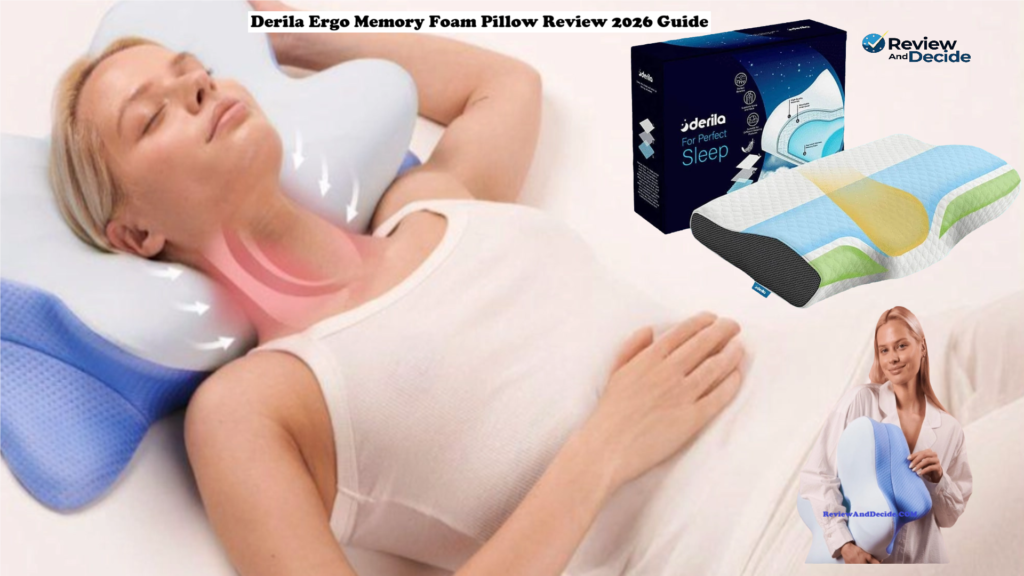
The Derila Ergo Memory Foam Pillow is a compact ergonomic pillow designed to support the natural curve of the neck during sleep. Unlike traditional flat pillows, the Derila pillow features a contoured shape that is intended to cradle the head while providing targeted support to the cervical spine.
The pillow uses high-density memory foam, a material originally developed for pressure-sensitive applications. Memory foam is known for its ability to respond to body heat and pressure, allowing it to adapt to the shape of the sleeper’s head and neck.
Key Design Characteristics
The Derila pillow typically includes the following design features:
- Ergonomic contour shape
- Central head cradle
- Raised neck support edges
- Memory foam construction
- Compact and lightweight design
The contour structure is intended to keep the head positioned slightly lower while supporting the neck curve. This positioning aims to promote a neutral spinal alignment, which is often recommended in sleep ergonomics.
Memory Foam Construction
Memory foam differs from traditional pillow fillings such as cotton, polyester fiber, or feathers. Instead of compressing evenly, memory foam slowly adapts to pressure and distributes weight across the surface.
This design may help reduce pressure points and maintain consistent support throughout the night.
Intended Sleep Support Purpose
The primary goal of ergonomic pillows like Derila is to support natural head and neck alignment during sleep. For some sleepers, maintaining this alignment may improve sleep comfort and reduce pressure on neck muscles.
However, individual comfort preferences can vary significantly depending on sleep position, mattress type, and personal pillow preference.
The Science of Sleep Ergonomics
Sleep ergonomics refers to the study of how sleeping positions and sleep surfaces influence comfort and body alignment. In sleep research, maintaining a neutral spine position is often considered important for minimizing pressure on muscles and joints.
The spine has natural curves that help distribute body weight and support movement. When sleeping, the goal is generally to maintain these curves without excessive bending or twisting.
Cervical Spine Alignment
The cervical spine refers to the upper portion of the spine located in the neck. This section contains seven vertebrae and supports the weight of the head.
During sleep, the pillow plays a major role in supporting the cervical spine. If a pillow is too high, too low, or lacks proper support, the neck may bend into an unnatural position.
Over time, this can create strain on muscles and ligaments around the neck.
Role of Pillow Height
Pillow height is another critical factor in sleep ergonomics. Ideally, the pillow should fill the space between the mattress and the sleeper’s head while keeping the neck aligned with the rest of the spine.
Different sleep positions require different pillow heights:
- Side sleepers often need thicker pillows
- Back sleepers typically benefit from moderate height
- Stomach sleepers usually require minimal pillow height
Ergonomic pillows are designed with these alignment principles in mind.
Pressure Distribution
Another key concept in sleep ergonomics is pressure distribution. Traditional pillows may compress unevenly, leading to concentrated pressure on certain areas.
Memory foam materials attempt to distribute pressure more evenly across the pillow surface.
How Memory Foam Technology Works
Memory foam is a type of viscoelastic polyurethane foam that responds to both pressure and temperature. This material was originally developed by NASA researchers in the 1960s to improve seat cushioning for astronauts.
Today, memory foam is commonly used in mattresses, pillows, and other comfort products.
“…many ergonomic pillows rely on modern memory foam pillow technology to distribute pressure more evenly.”
Pressure Response Mechanism
Memory foam reacts to pressure by gradually compressing where weight is applied. When pressure is removed, the foam slowly returns to its original shape.
This behavior allows the foam to conform closely to the shape of the head and neck.
Heat Sensitivity
Another characteristic of memory foam is its sensitivity to body heat. As the foam warms slightly from body temperature, it becomes more flexible and responsive.
This allows the pillow to adapt to the sleeper’s head shape.
Contouring Effect
One of the most recognized features of memory foam is its contouring effect. The foam molds around the sleeper, creating a customized support surface.
This contouring ability is why memory foam pillows are often marketed as supportive sleep accessories.
Comparison With Traditional Pillows
Traditional pillow materials include:
- Feather pillows
- Polyester fiber pillows
- Cotton-filled pillows
These materials often compress quickly under weight and may lose their original shape over time.
Memory foam tends to maintain its structure longer due to its dense composition.
Ergonomic Pillow Design Explained
Ergonomic pillows are designed with the goal of supporting the natural curves of the body during sleep. Unlike flat pillows, these pillows often include contours or elevation zones.
The Derila pillow uses a contour design intended to support the neck curve while cradling the head.
Contour Shape Structure
Contour pillows typically include:
- A central head indentation
- Elevated neck support areas
- Curved edges for alignment
This shape aims to reduce the need for sleepers to constantly adjust their pillow position during the night.
Head Cradle Concept
The central cradle area is designed to hold the head in place while the neck rests on the raised edge. This positioning may help maintain consistent neck support.
Neck Support Design
Neck support is particularly important for individuals who sleep on their backs or sides. Supporting the neck properly may help maintain a neutral spinal position.
Ergonomic pillow designs attempt to provide this support through structural shaping rather than simply adding more filling material.
Potential Benefits of Ergonomic Pillows
Ergonomic pillows are designed to address several common sleep comfort concerns.
Neck Alignment Support
One potential advantage of contour pillows is their ability to support the natural curve of the neck.
By maintaining alignment between the head and spine, the pillow may help improve sleep posture for some sleepers.
Pressure Reduction
Memory foam materials can distribute pressure across the pillow surface. This may reduce localized pressure points that sometimes occur with traditional pillows.
Sleep Comfort
Some sleepers report improved comfort when using contour pillows due to the stable head positioning.
Posture Stability
Because the pillow is shaped rather than flat, it may help keep the head in a consistent position throughout the night.
However, it is important to remember that sleep comfort is highly personal. A pillow that works well for one individual may not be ideal for another.
Sleep Positions and Pillow Compatibility
Sleep position plays an important role in determining whether a particular pillow design will feel comfortable.
Side Sleepers
Side sleepers often benefit from pillows that fill the gap between the mattress and the head.
Contour pillows may provide additional neck support for this position.
Back Sleepers
Back sleepers generally require moderate pillow height to maintain neck alignment.
The contour shape of ergonomic pillows may support the neck curve while allowing the head to rest slightly lower.
Stomach Sleepers
Stomach sleeping positions often require very low pillow height. Some stomach sleepers may prefer flatter pillows instead of contour designs.
Pros and Cons of the Derila Pillow
Pros
- Ergonomic contour design
- Memory foam pressure distribution
- Compact and lightweight
- May support neck alignment
Cons
- Adjustment period for new users
- Firmness preference may vary
- Not ideal for stomach sleepers
Balanced evaluation helps readers understand both potential advantages and limitations.
Who May Benefit From an Ergonomic Pillow
Certain sleepers may find ergonomic pillows helpful for improving sleep comfort.
Examples include:
- Side sleepers seeking neck support
- Back sleepers needing moderate alignment
- Individuals with desk-based work routines
- People interested in sleep posture improvement
Comfort outcomes may vary depending on individual sleep habits.
Who Might Not Prefer This Pillow
Ergonomic pillows may not suit every sleeper.
Examples include:
- Stomach sleepers who prefer flat pillows
- Individuals who prefer soft, fluffy pillows
- Those who prefer large pillow surfaces
Sleep comfort preferences are highly subjective.
Derila Pillow vs Traditional Pillows
| Feature | Derila Pillow | Traditional Pillow |
|---|---|---|
| Shape | Contour design | Flat |
| Support | Neck-focused | General |
| Material | Memory foam | Cotton / feather |
| Pressure distribution | Even | uneven |
| Durability | Structured foam | May flatten |
This comparison highlights the structural differences between pillow types.
“…many discussions about sleep products also consider sleep comfort and pressure distribution factors related to overall wellness.”
Product Information & Official Website
For readers interested in reviewing the official product details, pricing information, and current promotional offers, visiting the manufacturer’s website can provide the most accurate and up-to-date information.
Official product pages typically include:
- detailed product specifications
- material and design information
- current pricing or discounts
- shipping and delivery details
- refund or return policy information
Because product availability and pricing may change over time, checking the official website ensures that readers are viewing the latest information directly from the manufacturer.
👉 View Official Derila Ergo Memory Foam Pillow Information
Scientific Context Behind Sleep Support
Sleep posture has been studied in relation to musculoskeletal comfort and spinal alignment.
Research suggests that maintaining neutral spinal positioning during sleep may reduce strain on muscles and joints.
Several sleep health organizations emphasize the importance of:
- proper mattress support
- pillow height
- sleep posture
Pillows that support cervical alignment may contribute to improved sleep comfort for some individuals.
However, sleep quality is influenced by multiple factors including lifestyle habits, mattress quality, and stress levels.
Realistic Expectations From Sleep Products
While ergonomic pillows may offer structural support benefits, they are not medical treatments.
Sleep quality depends on many factors including:
- sleep hygiene
- mattress quality
- daily physical activity
- stress management
Individuals experiencing persistent neck pain should consider consulting healthcare professionals.
How to Choose the Right Pillow for Neck Support
Selecting a pillow involves several considerations.
Pillow Height
Choose a pillow that maintains neutral spine alignment.
Pillow Material
Common materials include memory foam, latex, and fiber fill.
Sleep Position
Different sleep positions require different support levels.
Personal Comfort Preference
Firmness preferences vary widely between individuals.
Frequently Asked Questions (FAQ)
Is the Derila pillow suitable for side sleepers?
Many side sleepers prefer pillows that support neck alignment. Ergonomic pillows may provide this type of support.
How long do memory foam pillows last?
Memory foam pillows typically last longer than traditional pillows, although lifespan varies by usage.
Do ergonomic pillows improve sleep posture?
They are designed to support neck alignment during sleep.
Do memory foam pillows retain heat?
Some memory foam products may retain warmth, although designs vary.
How often should pillows be replaced?
Many sleep experts recommend replacing pillows every 1–2 years.
Final Verdict
The Derila Ergo Memory Foam Pillow represents a modern ergonomic pillow design that focuses on supporting neck alignment through contour shaping and memory foam technology.
For some sleepers, this type of pillow may provide improved head positioning and pressure distribution compared to traditional flat pillows.
However, sleep comfort varies widely depending on individual preferences, sleep positions, and mattress support.
As with any sleep product, potential users should consider their personal sleep habits and comfort needs when selecting a pillow.
Transparency & Scientific Context
Sleep quality and physical comfort during rest are influenced by multiple factors including mattress support, sleep posture, lifestyle habits, and individual health conditions. While pillows can play a role in supporting head and neck positioning, they represent only one component of overall sleep ergonomics.
Products such as ergonomic memory foam pillows are designed to support natural neck curvature and head positioning during sleep. However, the effectiveness of any pillow design may vary depending on individual sleep habits, body structure, mattress firmness, and personal comfort preferences.
Scientific literature on sleep ergonomics generally focuses on spinal alignment, pressure distribution, and musculoskeletal comfort during sleep. These factors may influence sleep experience, but individual outcomes can vary widely.
This article discusses ergonomic pillow design and sleep posture principles based on publicly available research and general sleep science concepts.
Editorial Transparency Statement
This article is part of the educational content published on ReviewAndDecide.com, a website dedicated to explaining health, nutrition, and lifestyle topics using publicly available research and evidence-aware discussion.
Our editorial approach prioritizes clarity, transparency, and responsible communication of scientific information. The goal of this article is to explain the principles of sleep ergonomics, pillow design, and memory foam technology in an accessible and educational format.
Content published on this website is developed through a research-oriented editorial process that includes reviewing information from recognized health organizations, academic resources, and educational materials related to sleep science and ergonomics. Examples of commonly referenced institutions include Harvard Medical School, the National Institutes of Health (NIH), the Sleep Foundation, and major clinical health organizations.
We do not publish fabricated studies, exaggerated claims, or promotional statements presented as scientific evidence. When products are discussed, they are described within the context of their design features and general ergonomic purpose, not as medical treatments or guaranteed solutions.
Some pages on this website may contain affiliate links. If readers choose to make a purchase through these links, the website may earn a commission at no additional cost to the reader. This helps support ongoing research, content creation, and educational publishing.
All information is presented using neutral, evidence-aware language and is intended to help readers understand broader concepts related to sleep comfort and ergonomic design. Individual experiences with sleep products may vary depending on personal preferences, sleep habits, and overall health.
Evidence-Based Position
Our editorial approach prioritizes evidence-aware explanations rather than promotional claims. When discussing sleep products, the goal is to explain the design principles behind the product and the scientific concepts that may relate to sleep posture and comfort.
Current sleep research suggests that maintaining neutral spinal alignment during sleep may help reduce unnecessary strain on muscles and joints. Pillow height, firmness, and material composition can influence how well the head and neck remain supported throughout the night.
However, no single pillow design works equally well for every individual. Personal sleep habits, body dimensions, and mattress type all influence the overall sleep experience.
What Science Consistently Emphasizes
Across sleep research and ergonomic studies, several consistent themes appear:
- Maintaining neutral spine alignment during sleep
• Supporting the natural curve of the cervical spine
• Reducing pressure points around the neck and shoulders
• Matching pillow height with sleep position
• Ensuring mattress and pillow compatibility
Sleep comfort typically depends on the combined interaction of mattress support, pillow design, and sleeping posture rather than a single product alone.
Because sleep habits vary among individuals, sleep experts often recommend evaluating comfort and alignment rather than relying on universal solutions.
Where Products Fit (Contextual Clarification)
Products such as ergonomic pillows are designed to address specific comfort considerations related to sleep posture and head support. These products aim to provide structural support for the neck and head during sleep.
However, it is important to understand that sleep products are not medical treatments. Instead, they function as comfort and ergonomic support tools that may contribute to improved sleep positioning for some users.
Individuals experiencing persistent sleep discomfort, chronic neck pain, or other health concerns should seek professional medical guidance to determine appropriate treatment or ergonomic adjustments.
Final Educational Summary
The Derila Ergo Memory Foam Pillow represents a modern ergonomic pillow design intended to support head and neck positioning through contour shaping and memory foam technology.
From a sleep ergonomics perspective, pillows that maintain neutral spinal alignment and distribute pressure evenly may help support sleep comfort for some individuals.
However, sleep quality depends on a combination of factors including sleep habits, mattress support, lifestyle patterns, and individual anatomy.
Understanding these broader sleep health principles helps readers make informed decisions about sleep products while maintaining realistic expectations.
Educational Intent Disclaimer
The information presented in this article is intended strictly for educational and informational purposes. It does not constitute medical advice, diagnosis, or treatment recommendations.
We do not claim that any product discussed in this article can cure medical conditions or guarantee improvements in sleep health. Individual responses to sleep products may vary depending on personal comfort preferences and health factors.
Readers experiencing persistent sleep disturbances or musculoskeletal discomfort should consult qualified healthcare professionals for personalized guidance.
Research Methodology
The information included in this article is based on publicly available research literature, sleep health guidelines, and educational resources from recognized health organizations.
Editorial research may include:
- sleep ergonomics studies
• sleep posture research
• spinal alignment recommendations
• sleep health educational resources
“…research continues to explore how sleep affects metabolism and recovery in long-term health studies.”
Sources commonly referenced in sleep health discussions include organizations such as Harvard Medical School, the National Institutes of Health (NIH), Sleep Foundation, and major clinical health institutions.
The purpose of this methodology is to provide balanced, research-aware explanations rather than promotional claims.
Evidence Integrity Commitment
We are committed to presenting information responsibly and accurately. Content published on this website follows principles designed to maintain transparency and trustworthiness.
These principles include:
- avoiding exaggerated health claims
• presenting neutral explanations of scientific topics
• referencing recognized health organizations where appropriate
• clearly distinguishing educational information from medical advice
By maintaining these standards, the goal is to provide readers with reliable educational information about sleep ergonomics and related health topics.
Conclusion
Sleep comfort and posture play an important role in overall rest quality. Pillows designed with ergonomic principles aim to support the natural curve of the neck and promote balanced head positioning during sleep.
The Derila Ergo Memory Foam Pillow represents one example of a contour-based ergonomic pillow design. Its memory foam structure and shape are intended to support cervical alignment and distribute pressure more evenly than traditional flat pillows.
However, the effectiveness of any pillow ultimately depends on individual sleep habits, body structure, and mattress compatibility. Readers should consider these factors when evaluating sleep products and prioritize overall sleep hygiene, healthy routines, and comfort preferences.
A well-supported sleep environment—combining mattress quality, appropriate pillow support, and consistent sleep habits—remains one of the most important foundations for healthy rest.
Medical Disclaimer
This article is intended for educational purposes only and does not provide medical advice. Individuals experiencing persistent neck pain or sleep issues should consult qualified healthcare professionals.
 High-Authority References
Harvard Medical School – Sleep and Health