
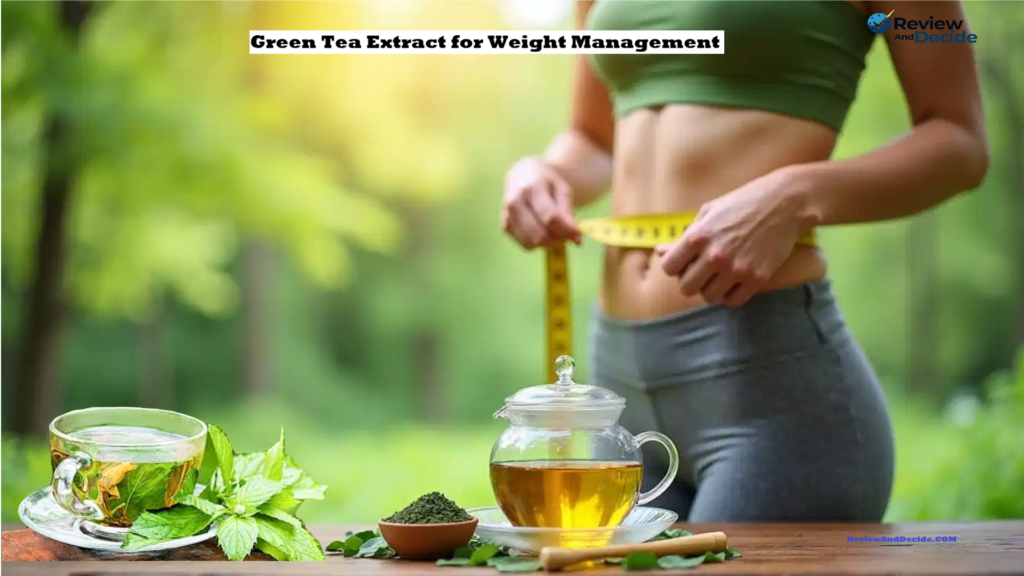
Green Tea Extract for Weight Management Explained (Research Guide)
Green Tea Extract for Weight Management is often linked to metabolism and fat oxidation. Learn what scientific research suggests in this evidence-based guide. Green tea extract has become one of the most widely discussed natural compounds in the context of weight management and metabolic health. Derived from the leaves of Camellia sinensis, green tea contains a range of bioactive compounds that have been studied for their potential effects on metabolism, fat oxidation, and energy balance.
Understanding how individual ingredients work is important when evaluating broader weight management solutions, especially those that focus on metabolism and energy balance.
Because modern weight management discussions often focus on metabolic processes rather than just calorie counting, ingredients like green tea extract are frequently examined within scientific research. However, understanding its role requires a balanced, evidence-based perspective.
This guide explores:
- What green tea extract is
- Its key active compounds
- How it may interact with metabolic processes
- What scientific studies suggest
- Limitations and realistic expectations
- Where it fits within a broader lifestyle context
This article avoids exaggerated claims and focuses on scientific understanding.
📜 Policy Declaration
This article is for educational and informational purposes only. We do not make medical claims or promise guaranteed weight loss. We do not fabricate research or exaggerate scientific findings. All information is presented using neutral, evidence-aware language and follows Google Helpful Content, YMYL, and E-E-A-T standards. Individual responses may vary.
What Is Green Tea Extract?
Green tea extract is a concentrated form of compounds found in green tea leaves. Unlike brewed tea, which contains diluted amounts of active components, extracts are often standardized to provide higher concentrations of specific bioactive substances.
The most studied compounds in green tea extract include:
- Catechins
- Epigallocatechin gallate (EGCG)
- Caffeine (in some formulations)
These compounds are associated with antioxidant activity and have been explored for their potential influence on metabolic pathways.
Green tea itself has been consumed for centuries, but modern scientific interest focuses on how concentrated extracts may interact with human physiology.
Key Compounds in Green Tea Extract
Understanding green tea extract requires examining its core components.
Catechins
Catechins are natural polyphenols found in green tea. They are known for their antioxidant properties and are believed to play a role in cellular protection.
Common catechins include:
- EGCG (Epigallocatechin gallate)
- EGC (Epigallocatechin)
- ECG (Epicatechin gallate)
Among these, EGCG is the most extensively studied.
EGCG (Epigallocatechin Gallate)
EGCG is often considered the primary active compound in green tea extract.
Research has explored its potential role in:
- Fat oxidation processes
- Energy metabolism
- Cellular signaling pathways
However, while EGCG is widely studied, its effects in humans vary depending on dosage, duration, and individual metabolism.
Caffeine (Optional Component)
Some green tea extracts contain caffeine, while others are decaffeinated.
Caffeine may influence:
- Energy expenditure
- Alertness
- Short-term metabolic activity
The combination of caffeine and catechins is sometimes discussed in relation to thermogenesis.
How Green Tea Extract May Influence Metabolism
To understand these effects, it is helpful to first explore how metabolism works and how the body regulates energy expenditure.
Metabolism refers to the complex processes by which the body converts food into energy.
Green tea extract has been studied for its potential interaction with:
- Energy expenditure
- Fat oxidation
- Thermogenesis
It is important to emphasize that these effects are generally modest and vary across individuals.
Thermogenesis Explained
Thermogenesis refers to the production of heat in the body, which can contribute to energy expenditure.
Some research suggests that catechins, particularly EGCG, may influence thermogenic pathways by:
- Supporting norepinephrine activity
- Affecting fat breakdown signaling
However, thermogenesis is influenced by many factors, including:
- Diet
- Physical activity
- Hormonal balance
Green tea extract alone does not significantly increase calorie burning in a way that replaces lifestyle changes.
Fat Oxidation Mechanisms
Fat oxidation refers to the process of breaking down fatty acids for energy.
Studies suggest that green tea compounds may:
- Influence fat oxidation during physical activity
- Affect energy utilization patterns
These effects are often observed under controlled conditions and may not translate equally to real-world scenarios.
Energy Balance Considerations
Weight management ultimately depends on energy balance:
Calories consumed vs. calories expended.
Green tea extract may play a small supporting role in metabolic efficiency, but it does not override the fundamental principles of energy balance.
Appetite and Energy Intake
Some discussions around green tea extract include appetite regulation.
However:
- Evidence on appetite suppression is inconsistent
- Effects, if present, are generally mild
- Individual responses vary significantly
Unlike hormones such as ghrelin and leptin, green tea extract does not directly control hunger signals.
What Scientific Studies Suggest
Research on green tea extract and weight management includes:
- Randomized controlled trials
- Observational studies
- Meta-analyses
Key Findings:
- Some studies show modest increases in energy expenditure
- Some studies report slight reductions in body weight over time
- Results are inconsistent across populations
Important Clarification:
Most observed effects are:
- Small in magnitude
- Dependent on dosage
- Influenced by diet and activity
There is no strong scientific consensus that green tea extract produces significant weight loss on its own.
Limitations and Research Gaps
Understanding the limitations of research is essential.
Common limitations include:
- Small sample sizes
- Short study durations
- Variability in extract composition
- Differences in participant health status
Additionally:
- Results from animal studies may not apply directly to humans
- Supplement formulations vary widely
These factors make it difficult to draw universal conclusions.
Safety and Considerations
Green tea extract is generally considered safe when consumed in moderate amounts.
However:
- High doses may affect liver function in rare cases
- Caffeine-containing extracts may cause sensitivity
- Individual tolerance varies
People who should be cautious include:
- Pregnant individuals
- Those with liver conditions
- Individuals sensitive to caffeine
Consultation with a healthcare professional is recommended before supplementation.
Where It Fits in a Balanced Lifestyle
Dietary approaches such as structured keto diet meal planning are often explored alongside ingredient-based strategies for metabolic support.
Green tea extract should be viewed within the broader context of health.
Sustainable weight management typically involves:
- Balanced nutrition
- Regular physical activity
- Adequate sleep
- Stress management
Supplements, including green tea extract, may complement these habits but do not replace them.
Lifestyle Integration
Instead of relying solely on supplements, consider:
Nutrition
Focus on whole, nutrient-dense foods.
Physical Activity
Regular movement supports metabolic function.
Sleep
Sleep influences hormones and energy regulation.
Hydration
Adequate fluid intake supports overall health.
Green tea extract may be part of a broader strategy, but it is not the primary driver.
Transparency & Scientific Context
Green tea extract is widely studied in the context of metabolism and weight management, but its role should be understood within a broader scientific framework.
Research in this area often examines isolated compounds such as catechins and EGCG under controlled conditions. While some findings suggest potential effects on thermogenesis and fat oxidation, results can vary depending on factors such as dosage, duration, lifestyle habits, and individual metabolic differences.
It is also important to recognize that:
- Many studies use concentrated extracts that differ from typical dietary intake
- Human responses to metabolic interventions are highly variable
- Observational associations do not always establish direct cause-and-effect relationships
Metabolism itself is a complex system influenced by multiple interacting variables, including diet quality, physical activity, sleep patterns, hormonal balance, and long-term behavioral consistency.
Understanding these limitations helps ensure that scientific findings are interpreted responsibly rather than overstated.
Evidence-Based Position
Based on current scientific literature, green tea extract may contribute modestly to certain metabolic processes, particularly in relation to energy expenditure and fat oxidation.
However, the overall evidence suggests that:
- Effects are generally small and not universally consistent
- Results often depend on controlled conditions that may not reflect real-world environments
- There is no strong consensus that green tea extract alone produces significant or sustained weight loss
Most research supports the view that green tea extract may act as a supportive factor, rather than a primary driver of metabolic change.
What Science Consistently Emphasizes
Across nutrition and metabolism research, several key principles remain consistent:
- Sustainable weight management depends on overall energy balance
- Dietary quality plays a central role in metabolic health
- Regular physical activity significantly influences energy expenditure
- Sleep and stress regulation affect hormonal balance
- Long-term consistency is more important than short-term interventions
Rather than focusing on a single compound, scientific consensus highlights the importance of integrated lifestyle patterns.
Where Supplements Fit (Contextual Clarification)
Supplements such as green tea extract are often explored for their potential role in supporting metabolic processes. However, their place within a health strategy should be clearly understood.
Green tea extract may:
- Complement a balanced diet
- Support certain metabolic pathways under specific conditions
- Provide antioxidant activity
At the same time, it does not:
- Replace nutritional planning
- Substitute physical activity
- Override energy balance principles
- Act as a standalone solution for weight management
When used, supplements should be viewed as adjuncts to lifestyle habits, not primary interventions.
Research Methodology
This article is based on a structured review of publicly available scientific literature related to green tea extract, metabolism, and energy regulation.
The research approach includes:
- Evaluation of peer-reviewed studies and systematic reviews
- Consideration of human clinical trials where available
- Analysis of study design, sample size, and duration
- Distinguishing between mechanistic findings and real-world outcomes
Where research findings are mixed or inconclusive, this is clearly acknowledged to maintain accuracy and transparency.
Editorial Transparency Statement
Our website operates as an educational health publisher.
We aim to present clear, structured, and evidence-aware information that helps readers understand health-related topics without exaggeration or misleading claims.
Our editorial principles include:
- Neutral, science-informed language
- Avoidance of “clinically proven” claims without context
- No guaranteed outcomes or exaggerated benefits
- Clear distinction between research findings and practical implications
Content is designed to support informed understanding rather than promote unrealistic expectations.
Evidence Integrity Commitment
We are committed to maintaining accuracy and transparency in all published content.
We do not:
- Fabricate or invent scientific data
- Present preliminary findings as established consensus
- Use anecdotal claims as scientific evidence
- Misrepresent the strength or limitations of research
Where evidence is evolving, uncertain, or variable, it is presented with appropriate context.
Final Educational Summary
Green tea extract contains bioactive compounds that have been studied for their potential role in metabolism and energy balance. While research suggests it may contribute modestly to thermogenesis and fat oxidation, these effects are generally limited and vary across individuals.
Current scientific understanding supports the idea that green tea extract may function as a supportive component within a broader health strategy, rather than a primary solution for weight management.
Long-term metabolic health is best supported through:
- Balanced nutrition
- Regular physical activity
- Adequate sleep
- Consistent lifestyle habits
A realistic, evidence-based approach helps ensure that expectations align with scientific understanding.
Educational Intent Disclaimer
This article is intended for educational and informational purposes only.
It does not diagnose, treat, cure, or prevent any medical condition.
It does not provide personalized medical advice.
It does not guarantee specific health outcomes.
All information is based on general scientific research and should be interpreted within the context of individual health circumstances.
Readers are encouraged to consult qualified healthcare professionals for personalized guidance related to nutrition, supplementation, or metabolic health.
Frequently Asked Questions (FAQ)
Does green tea extract burn fat directly?
No. It may support metabolic processes, but it does not directly burn fat or replace lifestyle changes.
Is EGCG effective for weight management?
EGCG has been studied for its potential role in metabolism, but results vary and effects are generally modest.
Can green tea extract replace exercise?
No. Physical activity remains a primary factor in metabolic health.
Is green tea extract safe daily?
Moderate intake is generally safe, but high doses may require medical consultation.
How long does it take to see results?
Results vary and depend on multiple factors including diet, activity, and overall health.
Conclusion
Green tea extract contains bioactive compounds that have been studied for their potential effects on metabolism and energy balance. Research suggests it may contribute to thermogenesis and fat oxidation under certain conditions, but these effects are typically modest.
There is no evidence that green tea extract alone leads to significant or sustained weight loss without lifestyle changes. Instead, its role should be understood as part of a broader health approach that includes nutrition, activity, sleep, and long-term consistency.
Readers interested in deeper analysis can explore more topics in our weight loss ingredient science resources.
Understanding the science behind ingredients allows for more informed decisions and realistic expectations.
Medical Disclaimer
This content is for informational purposes only and does not constitute medical advice. Always consult a qualified healthcare professional before making changes to your diet, lifestyle, or supplement routine.
📚 High-Authority References
NIH – Dietary Supplements Overview
Harvard Health – Nutrition and Weight
CDC – Healthy Weight
Cleveland Clinic – Nutrition Insights