

How Metabolism Really Works – Simple Scientific Guide (2026)
Discover How Metabolism Really Works 2026, explained simply with science-backed research insights on energy, fat burning, hormones, and how lifestyle choices influence metabolic health. Metabolism is one of the most talked-about concepts in health and weight management, yet it is also one of the most misunderstood. Many people believe they have a “fast” or “slow” metabolism and that this single factor determines whether they gain or lose weight. In reality, metabolism is a complex system of chemical processes that keeps your body alive and functioning every second of the day.
In 2026, scientific research has expanded our understanding of how metabolism works at the cellular level, how genetics and hormones influence it, and how lifestyle habits such as sleep, diet, and physical activity shape metabolic efficiency. Rather than being a fixed trait, metabolism is dynamic and responsive to both internal and external factors. This article explains metabolism in simple language, breaking down what it really means, how your body produces energy, why some people burn more calories than others, and what current research says about supporting healthy metabolic function. Whether your goal is weight management, better energy levels, or long-term wellness, understanding metabolism is a powerful first step.
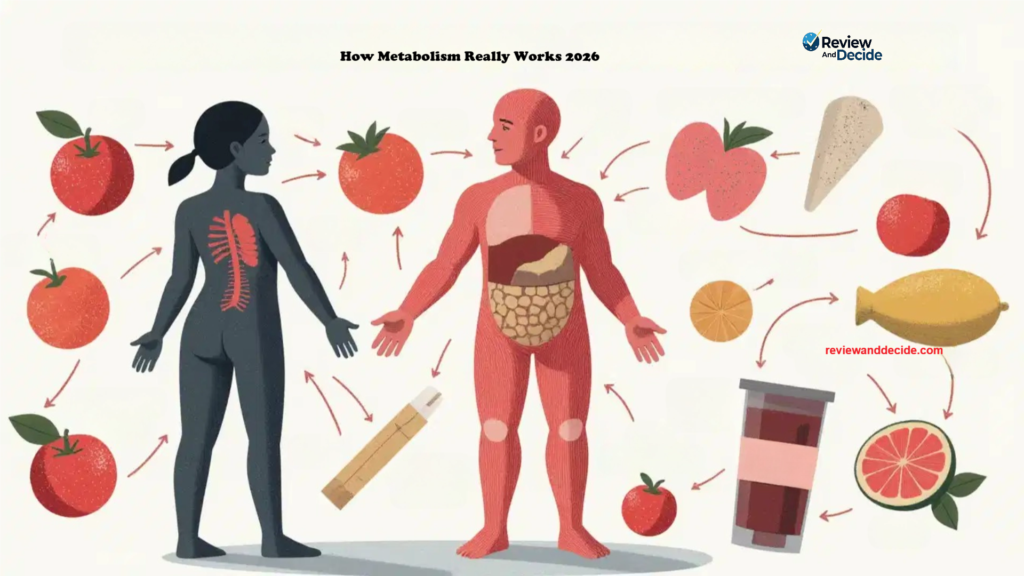
Illustration showing how the body converts food into energy through metabolism.
What Is Metabolism?
Metabolism refers to all the chemical reactions that occur inside your body to maintain life. These reactions allow your body to:
- Convert food into energy
- Build and repair tissues
- Regulate temperature
- Support organ function
- Remove waste products
In simple terms, metabolism is how your body turns what you eat and drink into fuel.
Scientists divide metabolism into two main categories:
Anabolism (Building Processes)
Anabolism involves building complex molecules from smaller ones. For example, your body uses amino acids to build muscle proteins or stores glucose as glycogen in muscles and the liver. These processes require energy.
Catabolism (Breaking-Down Processes)
Catabolism breaks down nutrients such as carbohydrates, fats, and proteins into smaller molecules to release energy. This released energy is used to power every function in your body.
Together, these two processes keep your body in balance and functioning properly.
How the Body Converts Food into Energy
When you eat, digestion breaks food down into basic components:
- Carbohydrates → glucose
- Fats → fatty acids
- Proteins → amino acids
These nutrients enter your bloodstream and are transported to cells. Inside the cells, tiny structures called mitochondria act as “power plants,” converting nutrients into adenosine triphosphate (ATP). ATP is the primary energy currency of the body.
Every heartbeat, breath, muscle contraction, and brain signal depends on ATP. The more efficiently your body produces and uses ATP, the more efficient your metabolism becomes.
Basal Metabolic Rate (BMR) Explained Simply
Basal Metabolic Rate (BMR) is the number of calories your body needs at rest to perform essential functions such as breathing, circulation, and cell maintenance.
Research shows that BMR typically accounts for 60–75% of total daily energy expenditure, making it the largest contributor to calorie burn.
What Influences BMR?
- Body size and weight
- Muscle mass
- Age
- Sex
- Genetics
People with more muscle mass tend to have higher BMR because muscle tissue requires more energy to maintain than fat tissue.
Total Daily Energy Expenditure (TDEE)
Your daily calorie burn consists of three main parts:
- Basal Metabolic Rate (BMR)
- Physical Activity
- Thermic Effect of Food (TEF)
Thermic Effect of Food
TEF refers to the calories burned while digesting and processing food. Protein has the highest thermic effect, meaning your body uses more energy to digest protein than carbohydrates or fats.
Why Metabolism Is Not “Fast” or “Slow” in One Simple Way
The idea of having a fast or slow metabolism is an oversimplification. Metabolism is better understood as a spectrum influenced by multiple interacting factors.
Two people of the same height and weight may still burn different numbers of calories due to differences in muscle mass, hormones, and activity levels.
Key Factors That Influence Metabolism
1. Genetics
Your genes affect enzyme activity, hormone levels, and how your body processes nutrients. While genetics play a role, they do not completely determine metabolic outcomes.
2. Age
Metabolism tends to decline gradually with age, largely due to loss of muscle mass and changes in hormone levels.
3. Muscle Mass
Muscle is metabolically active tissue. Increasing lean muscle through resistance training can raise resting calorie burn.
4. Hormones
Hormones such as thyroid hormones, insulin, leptin, and cortisol influence how your body stores and uses energy.
5. Physical Activity
Both structured exercise and everyday movement contribute significantly to daily calorie burn.
6. Sleep
Insufficient sleep is linked to disrupted hunger hormones and reduced metabolic efficiency.
7. Nutrition Quality
Highly processed diets may negatively affect metabolic health compared to balanced diets rich in whole foods.
The Role of Metabolism in Weight Management
Weight change occurs when calorie intake and calorie expenditure are not balanced.
- Calorie surplus → potential weight gain
- Calorie deficit → potential weight loss
Metabolism influences how many calories you burn, but it is only one part of the equation. Diet composition, physical activity, and behavioral factors also play major roles.
For more details on compounds that may support metabolic activity, you can read:
Natural Fat Burning Ingredients Explained Simply 2026
USDA announces major reset of U.S. nutrition policy
Metabolism and Fat Burning: How It Works
Fat burning occurs when your body breaks down stored triglycerides into fatty acids and uses them for energy. This process is influenced by:
- Hormone balance
- Energy demand
- Availability of carbohydrates
- Physical activity
During exercise, especially aerobic and resistance training, the body increases fat oxidation to meet energy needs.
Common Metabolism Myths
Myth 1: Starvation Mode Permanently Destroys Metabolism
Severe calorie restriction can temporarily lower metabolic rate, but normal eating and strength training can restore it.
Myth 2: Supplements Dramatically Boost Metabolism
Most supplements have modest effects. Lifestyle habits remain far more influential.
Myth 3: Metabolism Alone Determines Body Weight
Weight is influenced by multiple factors, not metabolism alone.
How to Support a Healthy Metabolism
1. Eat Enough Protein
Protein supports muscle maintenance and increases thermic effect.
2. Strength Train Regularly
Building muscle increases resting energy expenditure.
3. Stay Physically Active
Daily movement adds up.
4. Prioritize Sleep
Aim for 7–9 hours per night.
5. Manage Stress
Chronic stress can disrupt hormone balance.
Latest Research Insights (2026)
Recent studies suggest:
- Consistent sleep schedules improve metabolic flexibility
- Resistance training enhances mitochondrial efficiency
- Balanced macronutrient intake supports hormone regulation
These findings highlight that metabolism is adaptable and responsive to lifestyle changes.
Choosing Weight Management Approaches
Before selecting any program, comparing available options can help.
Best Weight Management Solutions Compared 2026 – Honest Buyer Guide
Compare Similar Weight Management Options
Looking to explore other popular weight management solutions before making a decision?
Want to explore other popular weight management options before making a decision?
Compare All Weight Management Solutions
For a complete breakdown of how the program works and what’s included, visit our
For deeper reviews:
Elated Diet Guide
Informational Hub
Frequently Asked Questions (FAQs)
Is metabolism the same as digestion?
No. Digestion is one part of metabolism.
Does metabolism slow with age?
Yes, gradually, but muscle maintenance can help offset it.
Can metabolism be improved?
Lifestyle changes can positively influence metabolic function.
Does drinking water boost metabolism?
Water slightly increases energy expenditure and supports normal function.
Conclusion
Metabolism is a complex but adaptable system that powers every function in your body. While genetics and age play a role, daily habits such as nutrition, physical activity, sleep, and stress management have a powerful influence on metabolic health.
Understanding how metabolism really works allows you to make informed choices that support energy levels, weight management, and overall wellness in 2026 and beyond.
🔒 Medical & Content Disclaimer
The information provided in this article is for general educational and informational purposes only and is not intended as medical advice. It should not be used to diagnose, treat, cure, or prevent any disease. Always consult a qualified healthcare professional or registered dietitian before making changes to your diet, exercise routine, or health practices, especially if you have an existing medical condition or are taking medications. Individual results may vary.
📚 References Sources
- National Institutes of Health (NIH) – Metabolism Overview
- MedlinePlus (U.S. National Library of Medicine) – Metabolism Basics
- Centers for Disease Control and Prevention (CDC) – Healthy Weight & Energy Balance
- Harvard T.H. Chan School of Public Health – Metabolism and Weight
- National Institute of Diabetes and Digestive and Kidney Diseases (NIDDK) – Weight Management
- Office of Dietary Supplements (NIH) – Dietary Supplements Fact Sheets
- Mayo Clinic – Metabolism and Weight Loss
- World Health Organization (WHO) – Healthy Diet
- PubMed (U.S. National Library of Medicine) – Metabolism Research Database
- Johns Hopkins Medicine – Metabolism and Nutrition
Scientific Perspective: Major health authorities such as the Centers for Disease Control and Prevention (CDC) and National Institutes of Health (NIH) explain that metabolism involves complex hormonal and cellular processes, influenced by diet, activity, sleep, and genetics. No single method alone “boosts” metabolism without overall healthy lifestyle habits. This article summarizes current scientific understanding, not medical treatment advice.