
School Meal Standards Reflect The 2026 Nutrition: How Federal Policies Shape Student Meals
Learn how federal School Meal Standards reflect the 2026 nutrition guidelines. Discover how nutrition standards shape school lunches, student health, and public health programs. School meals play a significant role in the daily nutrition of millions of children across the United States. Federal nutrition policies influence what foods are served in school cafeterias, how meals are balanced, and how nutrition education is integrated into the education system. In recent years, national nutrition discussions have increasingly focused on improving food quality and encouraging balanced eating habits at an early age. Updated public health guidance, including the CDC nutrition guidelines 2026, highlights the importance of whole foods, balanced dietary patterns, and reduced consumption of ultra-processed foods.
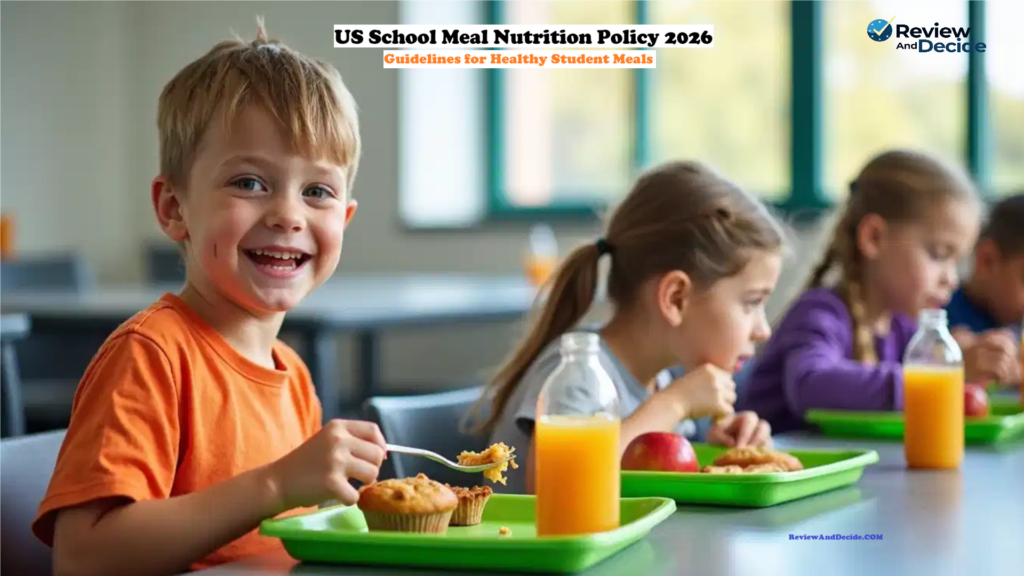
Because schools serve a large portion of the youth population every day, they have become an important platform for implementing these public health goals. Federal school meal policies are therefore designed not only to provide food but also to support long-term health outcomes.
This article explains how federal school meal policies align with broader nutrition guidance, how the system works, and why school meal programs are considered a central component of public health nutrition strategy.
Policy Declaration
This article provides an educational overview of federal nutrition policies related to school meal programs in the United States. It summarizes publicly available information from health and nutrition agencies and does not provide medical advice. The goal is to explain how federal nutrition guidelines influence school meals and public health initiatives.
The Role of Federal School Meal Programs
Federal school meal programs were created to ensure that children receive nutritious meals during the school day. Many families rely on school meals as a stable source of daily nutrition.
Two major national programs form the foundation of this system:
- National School Lunch Program (NSLP)
• School Breakfast Program (SBP)
These programs provide meals to millions of students every school day and are administered with support from federal nutrition policy frameworks.
The programs are designed to achieve several goals:
- Improve childhood nutrition
- Reduce hunger during school hours
- Support learning and concentration
- Promote healthy eating habits from a young age
School meal policies are closely linked with broader nutrition policies such as the USDA whole foods policy 2026, which emphasizes the importance of balanced meals and nutrient-dense foods.
Why School Meals Matter for Public Health
Nutrition during childhood plays a major role in long-term health outcomes. Research consistently shows that early dietary habits influence metabolic health, weight management, and overall well-being later in life.
Because children spend a large portion of their day in school, school meal programs offer an opportunity to encourage healthy eating patterns.
Public health experts often highlight several benefits of strong school nutrition policies:
Improved Nutrient Intake
School meal standards encourage meals that include vegetables, fruits, whole grains, and protein sources. This helps ensure children receive essential nutrients throughout the day.
Reduced Childhood Hunger
For many students, school meals provide the most consistent daily access to balanced food.
Early Nutrition Education
When healthy meals are consistently offered in schools, children become familiar with balanced eating patterns that may continue into adulthood.
Long-Term Health Prevention
Public health nutrition strategies aim to reduce long-term health risks such as obesity and metabolic disorders.
These goals align with broader public health nutrition strategies designed to improve population health outcomes over time.
Recent CDC nutrition guidelines 2026 also highlight the importance of balanced food patterns in schools and community health programs.
How Nutrition Guidelines Shape School Meal Policies
Federal nutrition policies for school meals are developed based on scientific research and national dietary guidance. Health agencies analyze large bodies of research related to nutrition, metabolism, and public health trends.
Guidelines for school meals generally emphasize:
- Balanced meal composition
• Nutrient-dense food choices
• Reduced added sugars
• Moderate sodium intake
• Whole grains and vegetables
These policies aim to translate broad nutrition guidance into practical meal standards that schools can implement.
When agencies update national nutrition guidance, those updates often influence how school meal programs evolve.
For example, when federal policies emphasize whole foods and balanced diets, school meal programs gradually adapt to include more vegetables, whole grains, and minimally processed options.
School meal standards are closely influenced by broader federal nutrition initiatives, including the US Nutrition Policy 2026, which emphasizes balanced diets built around nutrient-dense foods.
Key Nutritional Standards for School Meals
School meal policies include specific nutrition standards designed to ensure meals provide adequate nutrients while maintaining balanced calorie levels.
While specific requirements may evolve over time, several core principles remain consistent.
Balanced Meal Composition
School meals are structured to include a balance of major food groups:
- Fruits and vegetables
• Whole grains
• Lean protein sources
• Dairy or calcium-rich foods
This balance ensures children receive a range of essential nutrients.
Portion and Calorie Guidelines
Meals are designed to provide appropriate calorie levels based on age groups.
This helps maintain balanced energy intake without encouraging excessive calorie consumption.
Reduced Added Sugar
School nutrition policies encourage limiting foods that contain high levels of added sugar, including sugary beverages and heavily sweetened snacks.
Sodium Awareness
High sodium intake has long been associated with health concerns, so school meal standards often encourage gradual sodium reduction strategies.
Whole Grain Integration
Many programs emphasize replacing refined grains with whole grain alternatives where possible.
This reflects broader nutrition guidance encouraging increased whole grain consumption.
Whole Foods vs Processed Foods in School Meals
A growing area of discussion in public nutrition policy involves the role of whole foods compared to highly processed foods.
Research in whole foods vs processed foods research suggests that diets emphasizing whole foods are associated with improved nutritional quality.
Whole foods typically include:
- Fresh vegetables
• Fruits
• Whole grains
• Nuts and legumes
• Lean proteins
These foods tend to provide higher levels of essential nutrients compared to heavily processed products.
School meal programs increasingly attempt to incorporate these foods into meal planning where feasible.
However, implementing whole-food approaches in school environments also presents practical challenges such as cost, preparation time, and storage requirements.
How Schools Implement Nutrition Policies
Although nutrition policies are developed at the federal level, actual implementation occurs within local school districts.
School districts are responsible for:
- Meal planning
• Food purchasing
• Cafeteria preparation
• Nutrition education
Schools must balance federal guidelines with practical factors such as budgets, supply chains, and student preferences.
Many districts also work with registered dietitians and nutrition specialists to ensure meals meet guidelines.
Nutrition Education in Schools
School nutrition policies do more than regulate meals. Many programs also integrate nutrition education into the classroom environment.
Nutrition education may include:
- Lessons about balanced diets
• Understanding food groups
• Learning about healthy eating habits
• Encouraging active lifestyles
This educational component reinforces healthy eating messages beyond the cafeteria.
Challenges Schools Face When Implementing Nutrition Policies
Despite the benefits of school meal programs, implementing nutrition policies is not always simple.
Schools face several practical challenges.
Budget Constraints
Healthier ingredients sometimes cost more than processed alternatives, making budgeting a key concern for school districts.
Student Preferences
Students may initially prefer familiar foods, which can make introducing healthier alternatives challenging.
Food Preparation Resources
Fresh foods often require more preparation time and kitchen equipment.
Supply Chain Factors
Availability of certain foods can vary by region and season.
Despite these challenges, many schools continue to adapt their meal programs to align with evolving nutrition guidance.
The Role of Nutrition Policy in Childhood Health
Childhood nutrition is increasingly viewed as a major component of long-term public health planning.
Poor dietary habits during childhood may influence long-term health outcomes such as:
- metabolic health challenges
• diet-related diseases
• long-term weight management issues
Public health agencies emphasize that improving nutrition during childhood can help reduce health risks later in life.
School meal programs therefore represent one of the most practical ways to encourage healthy eating habits at a population level.
Lifestyle Foundation & Scientific Perspective
Modern health research consistently emphasizes that nutrition alone does not determine health outcomes. Instead, long-term wellness typically depends on multiple interacting lifestyle factors.
Scientific evidence suggests that healthy living often includes:
- balanced nutrition
• regular physical activity
• adequate sleep
• stress management
• consistent lifestyle habits
Federal health agencies often emphasize that whole foods and balanced dietary patterns provide the foundation for good health.
While nutritional supplements are sometimes studied for specific nutrient gaps, research generally supports the idea that nutrient-rich foods remain the primary source of essential vitamins and minerals.
For children in particular, establishing balanced eating habits early can help support lifelong wellness.
Scientific Context and Evidence Perspective
Nutrition science continues to evolve as researchers study how diet affects human health.
Most public health recommendations are based on several types of scientific research:
- long-term observational studies
• clinical trials
• epidemiological research
• population health surveys
These studies help researchers understand patterns in diet and health outcomes across large populations.
However, scientists also recognize that individual responses to dietary changes may vary depending on genetics, lifestyle, and environment.
This is why most public health nutrition guidance focuses on general patterns rather than promising specific outcomes.
Why School Nutrition Policies Continue to Evolve
Nutrition policy is not static. As scientific understanding improves, federal agencies periodically update dietary guidance and school nutrition policies.
Future policy updates may address topics such as:
- improving access to fresh foods
• expanding nutrition education
• supporting local food sourcing
• encouraging sustainable food systems
These updates aim to ensure that school meal programs remain aligned with evolving nutrition science and public health priorities.
Transparency & Scientific Context
Public nutrition policies are typically developed through collaborative review processes involving government agencies, public health researchers, and nutrition scientists. These policies aim to interpret large bodies of nutrition research in ways that can guide population-level health programs.
School meal standards and federal nutrition policies are therefore not created based on single studies. Instead, they reflect broader patterns observed across epidemiological studies, dietary research, and long-term public health observations.
Because nutrition science evolves continuously, policies may be updated over time as new research improves the understanding of dietary patterns and health outcomes.
Evidence-Based Position
The discussion in this article reflects an evidence-based approach to understanding school nutrition policies and their relationship with national dietary guidance.
Public health nutrition policies generally draw from:
- Population health studies
- Long-term nutritional epidemiology research
- Clinical nutrition trials
- Public health surveillance data
These sources help policymakers develop recommendations that promote balanced diets, nutrient-dense foods, and long-term health outcomes.
However, scientific evidence in nutrition often describes associations and trends rather than guaranteed outcomes.
What Science Consistently Emphasizes
Across multiple areas of nutrition research, scientific literature consistently highlights several foundational principles for maintaining long-term health.
These include:
- Balanced dietary patterns rich in vegetables, fruits, and whole grains
• Adequate protein intake from varied sources
• Moderation of added sugars and highly processed foods
• Regular physical activity
• Sufficient sleep and healthy lifestyle habits
Public health programs, including school meal initiatives, are often designed to reflect these broader lifestyle principles rather than focusing on isolated nutrients or individual food products.
Where Supplements Fit (Contextual Clarification)
Nutritional supplements are sometimes discussed in scientific research as tools for addressing specific nutrient gaps in certain populations.
However, public health agencies generally emphasize that balanced diets based on whole foods remain the primary source of essential nutrients for most individuals.
In many cases, nutrient needs can be met through diverse food patterns that include vegetables, fruits, grains, proteins, and dairy or fortified alternatives.
School meal programs therefore focus primarily on providing balanced meals rather than relying on supplemental nutrition strategies.
Research Methodology
The information summarized in this article reflects publicly available educational materials and research insights from recognized public health and nutrition institutions.
Sources commonly referenced when examining school meal policies and nutrition guidelines include research publications, public health reports, and policy summaries from organizations such as:
- CDC
- USDA
- National Institutes of Health (NIH)
- Dietary Guidelines Advisory Committee
These institutions review large datasets and scientific literature before issuing recommendations related to nutrition and public health.
Editorial Transparency Statement
Content published on ReviewAndDecide is intended to provide educational summaries of health, nutrition, and public policy topics.
Articles are written using publicly available research sources and aim to explain complex topics in clear, accessible language.
The website does not present itself as a medical authority and does not provide clinical treatment recommendations.
Where appropriate, articles may discuss nutritional products or programs within broader educational context.
Evidence Integrity Commitment
Every effort is made to ensure that information presented in this article reflects current publicly available research and established public health perspectives.
The content avoids exaggerated claims, guarantees of health outcomes, or unsupported medical statements.
Because nutrition science evolves over time, readers are encouraged to consult official public health resources and healthcare professionals for the most current information.
Final Educational Summary
Federal school meal policies represent one component of a broader public health strategy aimed at supporting balanced nutrition for children and adolescents.
By aligning school meal standards with national nutrition guidance, policymakers seek to encourage healthier dietary patterns during formative years.
These programs combine nutritional standards, education initiatives, and community health goals in order to support long-term well-being across the population.
Understanding how these policies work helps provide context for ongoing discussions about nutrition, public health, and food systems in the United States.
Educational Intent Disclaimer
This article is provided for informational and educational purposes only.
It aims to explain how federal nutrition policies relate to school meal programs and public health guidance.
The content does not attempt to replace official government publications or professional healthcare advice.
Readers interested in detailed policy documents should consult official public health agencies and nutrition authorities.
Frequently Asked Questions(FAQ)
Are school meals required to follow federal nutrition guidelines?
Schools participating in federal meal programs must follow specific nutrition standards to receive federal support.
Do school meal programs only affect public schools?
Most federal school meal policies primarily apply to public schools and certain participating institutions.
Are processed foods completely removed from school meals?
No. Policies typically encourage balanced meals and moderation rather than banning specific foods.
Why are vegetables and whole grains emphasized?
These foods provide important nutrients and dietary fiber, which support overall health and balanced diets.
Can schools customize their meal programs?
Yes. Local school districts have flexibility in implementing nutrition guidelines while still meeting federal standards.
Conclusion
Federal school meal policies play a crucial role in shaping how millions of children experience food during their school years. These programs are designed not only to provide meals but also to support long-term public health goals.
By aligning school meal standards with evolving nutrition guidance, policymakers aim to promote balanced eating habits, encourage nutrient-dense foods, and improve population health outcomes.
As nutrition research continues to evolve, school meal programs will likely remain an important tool for supporting healthy lifestyles and fostering better dietary habits for future generations.
For more educational articles discussing nutrition policy, school meal standards, and public health research, explore our public health nutrition research hub.
Medical Disclaimer
The information presented in this article is not intended to diagnose, treat, cure, or prevent any medical condition.
Health and nutrition decisions should always be made in consultation with qualified healthcare professionals.
Individual nutritional needs can vary based on age, medical history, lifestyle, and other personal factors.
For personalized medical or dietary guidance, readers should consult licensed healthcare providers or registered dietitians.
 High-Authority References & Sources
Centers for Disease Control and Prevention
United States Department of Agriculture
Dietary Guidelines for Americans