

What Are Ultra-Processed Foods and Why Do U.S. Nutrition Policies Limit Them?
What are ultra processed foods and why do US nutrition policies limit them? Learn the science, policy impact, and food examples in this 2026 guide. In recent years, nutrition science has shifted from focusing only on calories to emphasizing food quality and overall dietary patterns. Public health agencies now highlight the importance of nutrient-dense foods while encouraging reduced reliance on heavily processed products.
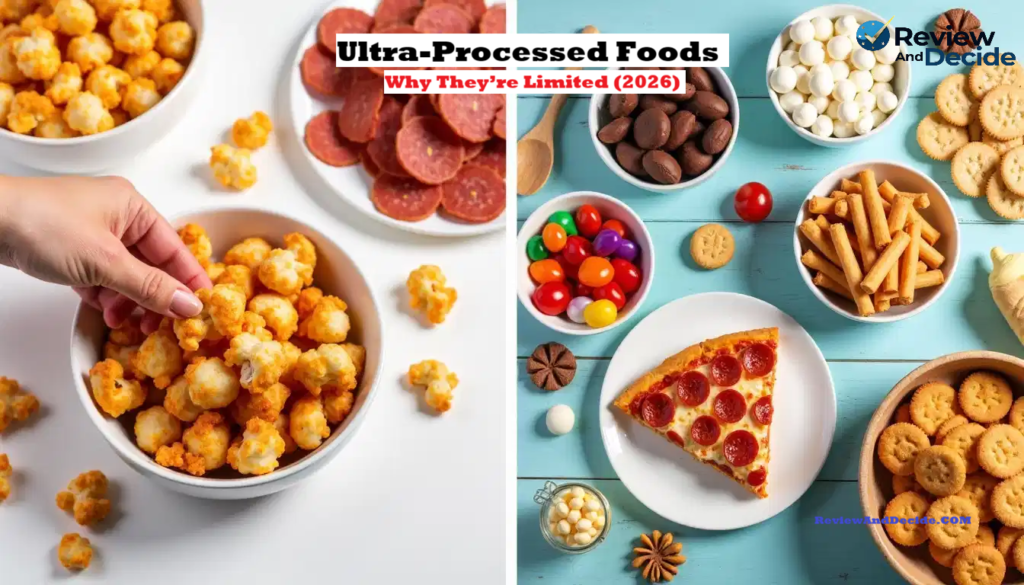
Ultra-processed foods have become a key focus in national nutrition discussions due to their widespread use in modern diets. Understanding how these foods are defined, and why policies address them, can help individuals make more informed and balanced dietary choices.
These developments are closely connected with broader US nutrition policy 2026, which emphasizes balanced dietary patterns and improved food quality across public health programs.
📜 Policy Declaration
This article is published for educational and informational purposes only. It explains how ultra-processed foods are defined and how U.S. nutrition policies address dietary patterns at a population level. The content does not provide medical advice, diagnosis, or treatment recommendations and follows evidence-aware and neutral information standards.
What Are Ultra-Processed Foods?
Ultra-processed foods are products that undergo multiple stages of industrial processing and often include ingredients that are rarely used in traditional home cooking. These foods are typically designed for convenience, long shelf life, and enhanced taste, making them widely available in modern food environments.
Common characteristics of ultra-processed foods include:
- Added sugars, refined oils, and high levels of sodium
• Artificial flavors, colors, emulsifiers, or preservatives
• Highly refined ingredients such as modified starches and protein isolates
• Packaging designed for long-term storage
• Ready-to-eat or ready-to-heat formats requiring minimal preparation
Examples of ultra-processed foods commonly found in everyday diets include:
- Sugary soft drinks and flavored beverages
• Packaged snack foods such as chips and cookies
• Instant noodles and ready-made pasta meals
• Processed meats like sausages and deli products
• Frozen convenience meals
• Sweetened breakfast cereals
It is important to understand that not all processed foods fall into this category. Some forms of processing—such as freezing vegetables, drying grains, or pasteurizing milk—are used to improve food safety and preserve nutrients. Ultra-processed foods specifically refer to products that are extensively modified and formulated using multiple industrial ingredients.
This distinction helps clarify why nutrition discussions often focus on processing levels rather than labeling all processed foods as unhealthy.
How Ultra-Processed Foods Differ from Whole Foods
Whole foods are foods that remain close to their natural state and typically undergo minimal processing. These foods form the foundation of most dietary recommendations because they provide a wide range of essential nutrients in their natural form.
Examples of whole and minimally processed foods include:
- Fresh fruits and vegetables
• Whole grains such as oats, brown rice, and quinoa
• Nuts, seeds, and legumes
• Eggs, fish, and lean meats
• Dairy products with minimal additives
Research in whole foods vs processed foods research consistently highlights that whole foods tend to offer higher nutrient density, meaning they provide more vitamins, minerals, and dietary fiber relative to their calorie content. These nutrients play important roles in supporting metabolic function, digestion, and overall health.
In contrast, ultra-processed foods are often energy-dense, meaning they can contain higher levels of calories while providing fewer essential nutrients. This difference does not mean that ultra-processed foods must be completely avoided, but it does highlight the importance of balance within overall dietary patterns.
Another key distinction lies in how these foods are consumed. Whole foods are often part of structured meals, while ultra-processed foods are frequently designed for convenience and may be consumed more frequently or in larger quantities.
This difference in consumption patterns has become an important consideration in nutrition policy discussions, where the focus is increasingly placed on long-term dietary habits rather than individual food choices.
Why Nutrition Policies Focus on Ultra-Processed Foods
Public health agencies increasingly focus on ultra-processed foods because of their widespread consumption, influence on dietary patterns, and role within modern food environments. Rather than targeting individual foods in isolation, nutrition policies aim to understand how overall eating patterns affect population health over time.
Ultra-processed foods are not only common but often represent a significant portion of daily calorie intake in many populations. For this reason, policymakers examine how these foods fit into broader dietary behaviors and long-term health trends.
Several key factors explain why ultra-processed foods have become a central focus in nutrition policy discussions:
1. Dietary Pattern Concerns
One of the primary reasons for policy attention is the way ultra-processed foods can shape overall dietary patterns. Diets that rely heavily on these foods may include:
- Higher intake of added sugars
• Elevated sodium consumption
• Lower intake of dietary fiber
• Reduced levels of essential vitamins and minerals
These patterns may differ from widely recommended dietary frameworks that emphasize balanced meals, nutrient-dense foods, and variety.
Importantly, public health guidance does not typically focus on eliminating specific foods entirely. Instead, it evaluates how frequent consumption patterns may influence overall diet quality. When ultra-processed foods make up a large portion of daily intake, they may displace more nutrient-rich options such as fruits, vegetables, and whole grains.
2. Convenience, Palatability, and Overconsumption
Ultra-processed foods are often designed with convenience in mind. They require little to no preparation, are easy to store, and can be consumed quickly in a variety of settings.
In addition to convenience, these foods are frequently engineered to be highly palatable through combinations of flavors, textures, and ingredients. This can make them appealing and easy to consume regularly.
From a behavioral perspective, several factors may contribute to increased consumption:
- Easy availability and portability
• Ready-to-eat formats
• Portion sizes that may not align with recommended intake
• Sensory characteristics that encourage repeat consumption
Nutrition policies take these behavioral aspects into account when evaluating how food environments influence eating habits.
3. Public Health Trends and Population Data
Public health recommendations are also reflected in the CDC nutrition guidelines 2026, which emphasize balanced dietary patterns and long-term health outcomes.
Another important factor is the observation of dietary trends at a population level. Large-scale studies and national nutrition surveys provide insight into how people eat and how these patterns may relate to broader health outcomes.
Some research has identified associations between dietary patterns high in ultra-processed foods and certain long-term health trends. While these findings are complex and continue to be studied, they are considered as part of the broader evidence base used by public health agencies.
It is important to note that:
- Observed associations do not always indicate direct causation
• Multiple lifestyle factors influence health outcomes
• Dietary patterns are only one part of a larger picture
For this reason, policies are developed using a balanced interpretation of evidence, focusing on overall trends rather than isolated conclusions.
4. Accessibility, Affordability, and the Modern Food Environment
Ultra-processed foods are deeply integrated into modern food systems. They are often:
- Widely available across retail environments
• More affordable in certain contexts
• Heavily marketed and promoted
• Convenient for busy lifestyles
These factors contribute to their popularity and make them a consistent part of everyday diets.
Public health policies therefore consider not only individual choices but also the environment in which those choices are made. The goal is to create conditions that make healthier options more accessible and practical.
This may involve:
- Supporting access to fresh and minimally processed foods
• Encouraging improved food labeling transparency
• Promoting nutrition education
• Strengthening programs such as school meal standards
Policy Perspective: Balance Over Restriction
It is important to understand that most nutrition policies do not frame ultra-processed foods as something to be completely eliminated. Instead, the focus is on balance, awareness, and long-term dietary patterns.
Public health recommendations typically aim to:
✔ Encourage gradual improvements in diet quality
✔ Promote variety and nutrient-dense foods
✔ Support realistic and sustainable eating habits
✔ Address both individual behavior and environmental factors
This balanced approach reflects the complexity of modern nutrition science and recognizes that dietary habits are influenced by a combination of personal choices, cultural practices, and food availability.
How U.S. Nutrition Policies Address Ultra-Processed Foods
U.S. nutrition policies generally do not focus on banning specific foods or creating rigid restrictions. Instead, they are designed to guide overall dietary patterns, improve food environments, and support healthier long-term habits at a population level.
This approach reflects an important principle in modern public health: rather than labeling foods as strictly “allowed” or “restricted,” policies aim to encourage balanced, sustainable, and realistic eating patterns that people can follow over time.
To address the growing presence of ultra-processed foods in everyday diets, U.S. nutrition policies use several complementary strategies.
Emphasizing Whole and Nutrient-Dense Foods
One of the most consistent strategies across federal nutrition guidance is the emphasis on whole and minimally processed foods. These foods are encouraged because they provide essential nutrients in their natural form and support overall dietary balance.
Public health recommendations commonly promote increased consumption of:
- Fruits and vegetables
• Whole grains such as oats, brown rice, and whole wheat
• Lean protein sources including poultry, fish, legumes, and plant-based options
• Healthy fats from sources like nuts, seeds, and certain oils
This direction aligns closely with broader national initiatives such as the USDA whole foods policy 2026, which highlights the importance of nutrient-dense food choices as the foundation of healthy dietary patterns.
Rather than focusing solely on reducing ultra-processed foods, policies work by increasing the availability and visibility of healthier alternatives.
Encouraging Balanced Dietary Patterns
Another key aspect of nutrition policy is the emphasis on overall dietary balance rather than isolated food choices. This means that recommendations focus on how different foods work together within a complete diet.
Balanced dietary patterns typically include:
- Variety across food groups to ensure nutrient diversity
• Appropriate proportions of carbohydrates, proteins, and fats
• Moderation of added sugars, sodium, and highly refined ingredients
• Consistency in meal patterns and portion awareness
This approach recognizes that health outcomes are influenced by long-term eating habits, not occasional food choices. It also allows for flexibility, making it easier for individuals to adapt recommendations to their own lifestyles.
Supporting Public Health and Community Programs
Programs such as school meal standards and nutrition policy 2026 play a key role in improving access to balanced nutrition across different populations.
Nutrition policies are also implemented through large-scale public health programs that influence daily food access and consumption patterns.
These include:
- School meal standards, which introduce balanced nutrition at an early age
• Community nutrition programs, which support education and awareness
• Food assistance initiatives, which improve access to essential foods for diverse populations
• Public health campaigns, which promote informed dietary choices
By integrating policy into real-world systems, these programs help translate scientific recommendations into practical, everyday applications.
The goal is not only to inform individuals but also to shape food environments in ways that make healthier choices more accessible and realistic.
Policy Approach: Guidance Over Restriction
A defining feature of U.S. nutrition policy is its emphasis on guidance rather than strict control. Instead of eliminating ultra-processed foods entirely, policies aim to:
✔ Encourage moderation
✔ Improve dietary awareness
✔ Support gradual behavior change
✔ Promote long-term sustainability
This balanced strategy reflects the understanding that dietary habits are influenced by a combination of personal preferences, cultural practices, economic factors, and food availability.
Scientific Research on Ultra-Processed Foods
Nutrition science examines how dietary patterns influence health outcomes across entire populations, rather than focusing solely on individual foods. To understand the role of ultra-processed foods, researchers rely on multiple scientific methods that provide different types of insights.
These include:
- Observational studies, which track dietary habits over time in large groups
• Clinical trials, which test controlled dietary interventions and measure specific health markers
• Epidemiological research, which analyzes long-term trends across populations
• National nutrition surveys, which provide real-world data on food consumption patterns
Some studies have observed associations between high consumption of ultra-processed foods and certain health-related patterns. However, these findings must be interpreted within a broader scientific framework.
Key considerations include:
- Association does not necessarily indicate direct causation
• Dietary behaviors are influenced by multiple lifestyle factors
• Individual responses vary based on genetics, environment, and habits
• Overall diet quality is more important than individual food categories
Because of this complexity, public health recommendations focus on long-term dietary patterns and lifestyle consistency, rather than labeling specific foods as inherently harmful.
The Role of Ultra-Processed Foods in Everyday Diets
Ultra-processed foods are now deeply integrated into modern food systems and daily routines. Their convenience, affordability, and widespread availability make them a common part of everyday diets for many individuals.
Recognizing this reality, nutrition policies generally do not promote complete elimination. Instead, they focus on moderation, awareness, and balance.
Public health guidance often encourages individuals to:
- Read and understand food labels and ingredient lists
• Be mindful of portion sizes and frequency of consumption
• Balance processed foods with whole and minimally processed options
• Make gradual, sustainable dietary improvements over time
This approach acknowledges that dietary choices are shaped by real-world factors such as time constraints, access to food, and personal preferences.
Rather than promoting restrictive eating patterns, policies aim to support flexible and realistic habits that can be maintained long-term.
In practice, this means that ultra-processed foods may still be included occasionally, but they are not recommended as the primary source of daily nutrition. Instead, they are viewed as one component within a broader dietary pattern that prioritizes nutrient-dense foods.
How Policies Encourage Healthier Food Choices
Public health nutrition policies are designed to support healthier choices at a population level by shaping food environments rather than controlling individual behavior.
These strategies aim to make balanced dietary options more accessible, understandable, and practical for everyday life.
Key policy-driven approaches include:
- Nutrition education programs that help individuals understand balanced diets and food groups
• Food labeling initiatives that provide clearer information about ingredients and nutritional content
• School meal improvements that introduce healthier food patterns at an early age
• Public awareness campaigns that promote long-term lifestyle changes
• Community-based nutrition programs that support access to healthier foods
These efforts are part of broader public health nutrition strategies, which aim to improve dietary habits across entire populations rather than targeting individuals alone.
Instead of focusing on restriction, these policies work by:
✔ Increasing awareness
✔ Improving food access
✔ Supporting healthier defaults
✔ Encouraging informed decision-making
Lifestyle Foundation & Scientific Perspective
Modern scientific research consistently emphasizes that health outcomes are influenced by a combination of lifestyle factors rather than any single dietary component.
Nutrition is one important part of this equation, but it interacts with several other key elements that contribute to overall well-being.
These include:
- Balanced and diverse diet based on nutrient-dense foods
• Regular physical activity, which supports metabolic health
• Adequate sleep, which plays a role in hormonal balance and recovery
• Stress management, which can influence eating patterns and overall health
• Consistent daily routines, which help maintain long-term habits
Scientific literature often highlights that long-term health is shaped by patterns over time, not short-term changes or isolated dietary decisions.
While ultra-processed foods are part of ongoing research and policy discussions, they represent only one aspect of a broader lifestyle picture.
Public health recommendations therefore focus on:
✔ Sustainable dietary habits
✔ Balanced nutrition rather than restriction
✔ Lifestyle consistency
✔ Long-term health behavior patterns
This approach reflects a shift in modern nutrition science—from focusing on individual nutrients or foods to understanding how overall lifestyle patterns influence health outcomes over time.
Transparency & Scientific Context
Nutrition policies are developed through structured, multi-layered review processes that involve public health institutions, scientific advisory committees, and independent research analysis. These policies are not based on single studies or short-term findings. Instead, they reflect conclusions drawn from large bodies of scientific literature, including long-term population studies, dietary intake data, and controlled research environments.
Public health agencies evaluate patterns across multiple datasets to understand how dietary behaviors influence health outcomes at a population level. This approach allows policymakers to identify consistent trends rather than relying on isolated results.
Because nutrition science is continuously evolving, policy frameworks are periodically updated to reflect new evidence, emerging research, and changes in dietary patterns across the population. This ensures that recommendations remain relevant, evidence-aware, and aligned with current scientific understanding.
Evidence-Based Position
This article presents an evidence-based overview of ultra-processed foods within the context of public health and nutrition policy discussions. The content is informed by a combination of scientific research, public health reports, and established policy frameworks.
Primary sources of information typically include:
- Peer-reviewed nutrition research
• Population-level health studies
• Government and institutional policy reports
• Public health surveillance data
The objective is to explain the topic using balanced, neutral language while avoiding exaggerated claims or simplified interpretations of complex scientific findings. Where appropriate, the content reflects general scientific consensus rather than isolated viewpoints.
What Science Consistently Emphasizes
Across a wide range of nutrition and public health research, several core principles appear consistently. While specific dietary recommendations may evolve, the foundational concepts guiding most scientific discussions remain relatively stable.
These include:
- The importance of consuming a variety of whole and minimally processed foods
• Maintaining balanced dietary patterns that include essential nutrients
• Moderating the intake of added sugars, excess sodium, and highly processed products
• Recognizing the role of lifestyle behaviors such as physical activity and sleep
Rather than focusing on individual foods in isolation, scientific literature generally emphasizes overall dietary patterns and long-term habits. These patterns are considered more relevant to health outcomes than occasional dietary choices.
Where Supplements Fit (Contextual Clarification)
Nutritional supplements are sometimes included in scientific discussions as a way to address specific nutrient deficiencies or unique dietary needs in certain populations. However, public health guidance typically prioritizes obtaining nutrients through whole and minimally processed foods.
Food-based nutrition provides a complex combination of vitamins, minerals, fiber, and bioactive compounds that work together within the body. This synergy is often difficult to replicate through isolated nutrients found in supplements.
While supplements may have a role in certain contexts, they are generally considered complementary rather than primary sources of nutrition. Public health recommendations therefore focus on encouraging balanced dietary patterns built around real foods as the foundation of long-term health.
Research Methodology
The information presented in this article is based on publicly available data and educational materials from recognized health and nutrition institutions. These organizations use rigorous methodologies to evaluate scientific evidence and develop policy recommendations.
Common research approaches include:
- Analysis of large-scale population health datasets
• Review of peer-reviewed scientific literature
• Evaluation of long-term dietary trends
• Advisory committee reports and consensus statements
Institutions such as the CDC, USDA, NIH, and the Dietary Guidelines Advisory Committee synthesize findings from multiple sources to ensure that recommendations reflect a broad and reliable evidence base.
Editorial Transparency Statement
This content is produced as part of an educational publishing approach focused on explaining complex health and nutrition topics in a clear and accessible format. The goal is to help readers better understand public health discussions without introducing bias or unsupported claims.
The article does not provide medical diagnoses, treatment recommendations, or personalized dietary advice. Any references to nutrition-related products or concepts are presented within an informational context rather than promotional intent.
Evidence Integrity Commitment
Every effort is made to ensure that the information presented in this article reflects current scientific understanding and publicly available research. The content is written using neutral, evidence-aware language that avoids overstating findings or implying guaranteed outcomes.
No fabricated statistics, unsupported claims, or exaggerated conclusions are included. Where scientific uncertainty exists, it is acknowledged as part of the broader research landscape.
Readers are encouraged to interpret the information as general educational guidance rather than definitive conclusions.
Final Educational Summary
Ultra-processed foods have become a central topic in modern nutrition and public health discussions due to their widespread presence in contemporary diets. U.S. nutrition policies address this issue by promoting balanced dietary patterns that emphasize whole and minimally processed foods.
Rather than focusing on strict restrictions or elimination, public health strategies aim to support sustainable improvements in dietary habits over time. These approaches consider real-world factors such as food accessibility, lifestyle patterns, and individual preferences.
By understanding how nutrition policies are developed and applied, individuals can gain a clearer perspective on how dietary guidance fits into broader public health goals. This knowledge supports more informed decision-making while recognizing the complexity of nutrition science.
Educational Intent Disclaimer
This article is intended solely for informational and educational purposes. It aims to explain general concepts related to nutrition policy, ultra-processed foods, and public health research.
The content does not replace official guidelines, regulatory documents, or professional advice. Readers seeking detailed policy information should refer to official publications from recognized public health agencies.
Frequently Asked Questions (FAQ)
What are ultra-processed foods?
Ultra-processed foods are products that go through multiple stages of industrial processing and often contain added sugars, refined oils, artificial ingredients, and preservatives. These foods are typically ready-to-eat or require minimal preparation, making them widely available in modern diets.
Why do U.S. nutrition policies focus on ultra-processed foods?
U.S. nutrition policies focus on ultra-processed foods because of their widespread consumption and their potential influence on overall dietary patterns. Public health strategies aim to encourage balanced diets by promoting whole foods and reducing reliance on heavily processed products.
Are ultra-processed foods banned in the United States?
No, ultra-processed foods are not banned. U.S. nutrition policies generally focus on guidance rather than restriction. The goal is to encourage moderation and promote healthier food choices rather than eliminate specific foods entirely.
How do ultra-processed foods differ from whole foods?
Ultra-processed foods are highly modified and often contain multiple industrial ingredients, while whole foods are minimally processed and closer to their natural state. Whole foods typically provide higher nutrient density, including fiber, vitamins, and minerals.
Do ultra-processed foods affect health?
Research has explored associations between high consumption of ultra-processed foods and certain health patterns. However, outcomes may vary depending on overall diet, lifestyle habits, and individual factors. Public health guidance focuses on balanced dietary patterns rather than single food categories.
How do nutrition policies encourage healthier eating?
Nutrition policies encourage healthier eating by promoting whole foods, improving food labeling, supporting school meal programs, and increasing public awareness. These strategies aim to make balanced dietary choices more accessible and practical.
Can ultra-processed foods be part of a balanced diet?
Yes, ultra-processed foods can be included occasionally as part of a balanced diet. Public health recommendations generally emphasize moderation, variety, and overall dietary patterns rather than strict elimination of specific foods.
What is the role of public health programs in nutrition policy?
Public health programs, such as school meal standards and community nutrition initiatives, help implement nutrition policies in real-world settings. These programs aim to improve access to healthier foods and support long-term dietary habits.
Conclusion
Ultra-processed foods have become a significant part of modern diets, largely due to their convenience, accessibility, and widespread availability. As nutrition science continues to evolve, public health discussions have increasingly shifted toward understanding how overall dietary patterns—rather than individual foods alone—affect long-term health outcomes.
U.S. nutrition policies reflect this broader perspective. Instead of focusing on strict restrictions, these policies aim to encourage balanced eating habits, promote nutrient-dense foods, and support sustainable lifestyle changes. By emphasizing whole foods and moderation, public health strategies seek to improve dietary quality while remaining practical for everyday life.
It is important to recognize that nutrition is not defined by a single food choice but by consistent patterns over time. Ultra-processed foods may still be part of modern eating habits, but they are generally recommended in moderation within a balanced diet that includes a variety of whole and minimally processed foods.
Understanding how nutrition policies approach ultra-processed foods provides valuable context for making informed dietary decisions. These insights highlight the importance of long-term habits, lifestyle balance, and awareness—key elements that continue to shape public health guidance and nutrition recommendations in the United States.
For more educational insights on nutrition policy and dietary research, explore our health and wellness research hub.
For a deeper understanding of how national dietary strategies are evolving, explore our guide to US nutrition policy 2026.
Medical Disclaimer
The information presented in this article is not intended to diagnose, treat, cure, or prevent any medical condition. Individual health needs can vary based on personal factors such as age, medical history, lifestyle, and dietary requirements.
For personalized health or nutrition advice, readers should consult qualified healthcare professionals, including licensed physicians or registered dietitians.