Exercise Finder by Muscle Group – Free Body Part Workout Tool
Use this free Body Part Exercise Finder to discover chest, back, shoulder, arm, leg, glute, and core exercises for home or gym workouts. Fast, simple, and beginner-friendly.
Body Part Exercise Finder
Select gender, switch front or back view, click a muscle group, and discover useful workout ideas.
Select a body part
Click a highlighted muscle area to see recommended exercises.
No muscle selected yet.
Find Exercises by Body Part – Free Beginner Home & Gym Guide
Find exercises by body part with this free muscle group workout tool. Explore beginner-friendly chest, back, shoulder, abs, leg, and glute exercises for home or gym. Finding the right workout can feel confusing when you do not know which exercise targets which muscle. That is why a Body Part Exercise Finder can be genuinely useful. Instead of searching random workout lists, you can choose a muscle group, view a body map, and quickly discover relevant exercises for your training goal.
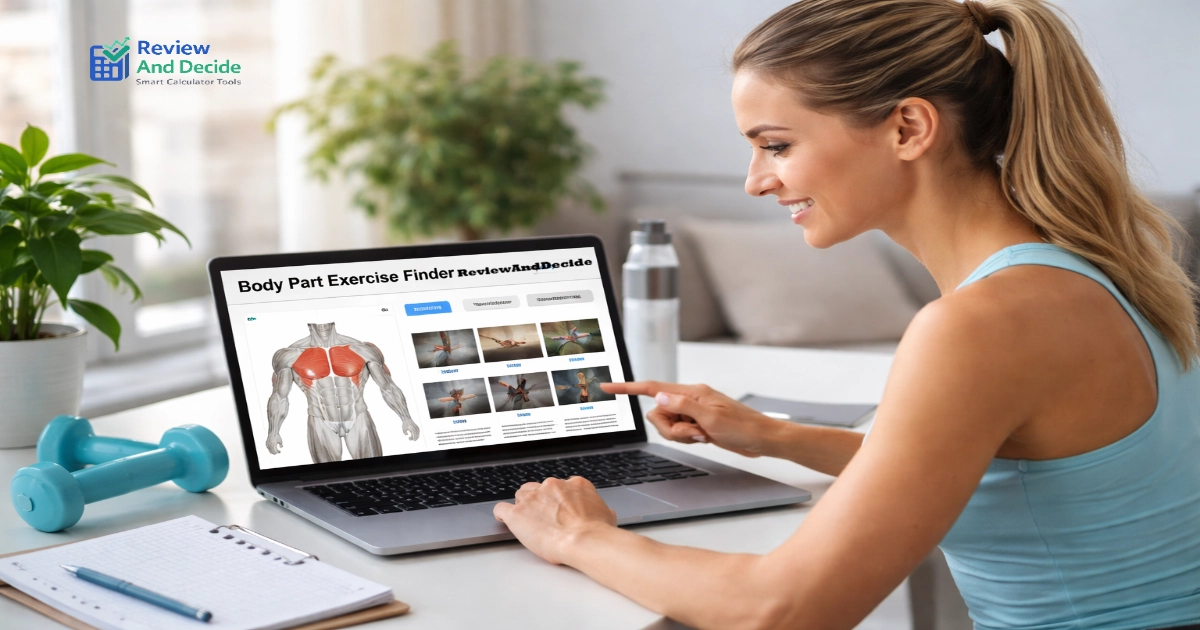
Our free tool is built to make exercise selection easier for beginners and more organized for regular gym users. Whether you want chest exercises, shoulder movements, glute workouts, hamstring training ideas, or beginner-friendly ab exercises, this tool helps you find a better starting point without wasting time.
Muscle-based exercise discovery has become a proven, useful format online because users want fast filtering by body part, equipment, and difficulty rather than long articles with no structure. MuscleWiki itself uses an interactive muscle map, directory filtering, and workout discovery experience built around that same practical need.
Why Use a Body Part Exercise Finder?
A lot of people know they want to “train back” or “work on legs,” but they are not sure which movements fit home workouts, beginner routines, or gym sessions. This tool solves that problem by organizing exercises around muscle groups.
It can help you:
- find exercises by body part faster
- choose between home and gym options
- discover beginner-friendly movements
- explore more advanced training ideas
- build a more structured workout plan
This is especially useful for people who want quick direction instead of reading multiple scattered pages.
How This Exercise Finder Works
The tool lets you choose a body area and then shows exercise suggestions connected to that muscle group. In the V2 version, users can switch between male and female view, front and back body maps, and explore muscle areas like chest, shoulders, biceps, triceps, abs, back, lats, glutes, hamstrings, quads, and calves.
You can also use filters such as:
- home or gym
- beginner, intermediate, or advanced
- quick keyword search
This type of filtered exercise discovery matches how modern workout tools and apps increasingly organize movement libraries—by muscle group, exercise type, and difficulty.
Who This Tool Is Best For
This body part workout finder is useful for:
Beginners
If you are new to fitness, the biggest challenge is often knowing where to start. A structured body-part finder reduces confusion and gives you a simpler exercise shortlist.
Home workout users
Many people want practical no-gym exercise ideas. Long-tail home workout searches remain common because users specifically want bodyweight or minimal-equipment options.
Gym users
If you train in a gym, filtering by muscle group helps you build better split workouts such as chest day, pull day, push day, back day, or lower body day.
Content researchers and planners
A clean exercise tool can also help users organize routines, compare movement types, and plan training more efficiently.
Major Muscle Groups You Can Explore
Chest
Chest exercises help improve pressing strength and upper-body development. Popular examples include push-ups, incline push-ups, chest press, bench press, and cable fly variations.
Shoulders
Shoulder training can include arm circles, pike push-ups, dumbbell shoulder press, lateral raises, and other stability-focused movements.
Biceps
For arm training, users often look for curls, resistance-band movements, and simple beginner exercises that can be done at home or in the gym.
Triceps
Triceps movements can include dips, extensions, pushdowns, and close-grip pressing styles.
Abs and Core
Core exercises remain one of the most searched workout categories because users want both beginner and equipment-free options. Planks, crunches, mountain climbers, and knee raises are common examples.
Back and Lats
Back training supports posture, pulling strength, and overall upper-body balance. Rows, pulldowns, pull-ups, and extensions are often included.
Glutes and Hamstrings
Lower-body posterior training is increasingly popular for home and gym routines. Glute bridges, donkey kicks, hip thrusts, hamstring curls, and Romanian deadlifts are common choices. Searches for no-weight glute exercise content also show lasting interest in this area.
Quads and Calves
Leg training helps with mobility, strength, and athletic support. Squats, lunges, calf raises, step-ups, and leg press variations are widely used across levels.
Home vs Gym Exercise Discovery
One of the most useful parts of a tool like this is separating home exercises from gym exercises.
At home, users usually prefer:
- bodyweight movements
- resistance band options
- chair or bench-supported exercises
- floor-based core work
In the gym, users may want:
- machine-based movements
- barbell or dumbbell options
- cable exercises
- heavier strength variations
This matters because user intent changes a lot depending on available equipment. Many current workout platforms highlight muscle group plus equipment filtering for exactly that reason.
Why Beginners Need Muscle Group Guidance
Beginners often search broad workout phrases, but what they usually need is a simple decision tool. A body part exercise finder helps break a confusing topic into manageable choices.
For example:
- Want chest? Start with push-ups or incline push-ups.
- Want shoulders? Begin with arm circles and light presses.
- Want glutes? Start with glute bridges and donkey kicks.
- Want abs? Use planks and basic crunches first.
This guided structure is more useful than dumping users into a massive exercise database without clear entry points.
Better Than Random Workout Lists
A normal fitness article may list “20 best exercises,” but it does not always help users quickly decide what fits their goal, level, or equipment.
A structured exercise finder is better because it helps users:
- search less
- compare faster
- pick more relevant movements
- avoid unnecessary complexity
- explore by body part visually
That interactive, organized experience is one reason muscle-map based tools continue to stand out in the fitness space.
How to Use This Tool More Effectively
To get better value from the tool:
1. Start with one goal
Choose a single target like chest, back, glutes, or abs.
2. Match your equipment
Use home or gym filters depending on what you actually have.
3. Pick your level honestly
Beginner filters often produce safer, simpler options.
4. Avoid adding too many exercises
Most users do not need huge exercise variety in one session. A few relevant movements are usually enough to build a solid routine.
5. Pair exercise discovery with planning tools
It helps to combine workout selection with calorie and body-composition tools for a better complete system.
Build a Smarter Fitness Workflow
A body part exercise finder works even better when connected with related tools. For example:
- BMI Calculator for basic body metrics
- BMR Calculator for estimated baseline calorie needs
- Daily Calorie Calculator for nutrition planning
This turns a simple exercise tool into a more useful fitness decision hub.
Is This Tool a Replacement for a Trainer?
No. This tool is meant for exercise discovery and planning support. It is useful for finding movement ideas and understanding which exercises commonly target specific areas, but it is not personal medical or coaching advice.
If someone has pain, injury history, limited mobility, or a medical condition, professional guidance is the safer route before starting a new training plan.
Final Thoughts
A well-built Body Part Exercise Finder is one of the most practical evergreen fitness tools because it matches real user behavior. People often know the body area they want to train, but they need a faster way to discover the right exercise options.
That is why muscle-group workout tools remain useful: they reduce confusion, improve navigation, and help users move from “I want to train this area” to “Here are exercises I can actually do.”
For ReviewAndDecide, this type of free tool can become a strong evergreen asset because it combines utility, repeat usage, search intent, and clean internal linking potential.
Frequently Asked Questions (FAQs)
What is a body part exercise finder?
A body part exercise finder is a tool that helps users discover exercises based on specific muscle groups such as chest, shoulders, abs, back, glutes, hamstrings, or legs.
Can I use this exercise finder for home workouts?
Yes. You can use it to find home-friendly bodyweight or minimal-equipment exercises depending on the tool filters and available options.
Is this tool good for beginners?
Yes. Beginners can use it to explore simpler exercises by body part without needing to search many different workout pages.
Can I find gym exercises by muscle group?
Yes. The tool can separate home and gym options so users can find movements that match their equipment and workout environment.
Does this tool replace a personal trainer?
No. It is useful for exercise discovery and planning, but it does not replace personalized coaching, injury management, or medical guidance.
Which body parts can I explore?
Depending on the version, users can explore chest, shoulders, biceps, triceps, abs, back, lats, glutes, hamstrings, quads, and calves.
Fitness Information Disclaimer
This tool and article are provided for general educational and informational purposes only. They do not provide medical advice, diagnosis, or treatment. Exercise suitability varies by person depending on age, fitness level, mobility, injury history, and health conditions. Users should apply reasonable judgment and seek qualified professional advice before beginning a new exercise program, especially if they have pain, prior injuries, or medical concerns.
Content Quality & Policy Transparency
This tool is designed to provide helpful, user-focused educational guidance for discovering exercises by body part. It is not intended to replace professional medical, physiotherapy, or personal training advice.
We aim to follow modern search quality standards by prioritizing usefulness, clarity, fast performance, and original value for users.
References:
- Google Helpful Content:
- Google Search Essentials:
- Google AI Content Guidance:
AdSense Disclaimer
This page contains educational fitness information only. No guaranteed results, cure claims, or misleading body transformation promises are made. Exercise suitability varies by person.
Why This Tool Is Google Helpful Content & AdSense Friendly
This Body Part Exercise Finder is built around real user needs rather than search-engine tricks. Many visitors do not want long, confusing workout articles—they simply want a faster way to find exercises for a specific body area such as chest, shoulders, back, legs, glutes, or abs. A practical tool that solves that need can align well with Google’s people-first content principles when it is genuinely useful, clear, and original.
Google’s guidance consistently emphasizes creating content for people first. That means focusing on usefulness, trust, and satisfying the visitor’s goal rather than publishing pages only to rank for keywords. This tool follows that model by giving users a direct utility experience: select a body part, explore exercises, filter by level or location, and quickly move forward with their fitness planning.
🔗 Google Helpful Content Guidance:
1. Solves a Real User Problem
Users often search things like:
- chest exercises at home
- beginner shoulder workout
- back exercises gym
- glute workouts no equipment
- exercises for hamstrings
Instead of forcing users to read multiple disconnected pages, this tool organizes exercise discovery into one cleaner experience. That practical utility is often stronger than thin list-style content because it helps users complete a task.
2. Designed for People, Not Search Engines
This page is not built around keyword stuffing or duplicate text. It is centered around an interactive tool experience supported by helpful explanations. Google advises site owners to create content that demonstrates genuine usefulness rather than pages made primarily to attract clicks.
3. AI-Assisted Content Can Be Acceptable When Helpful
If AI is used for drafting descriptions, organizing exercise categories, or improving layout text, that does not automatically violate Google policy. Google has publicly stated that content quality matters more than whether content was produced with AI or human assistance. The key issue is usefulness, originality, and avoiding spam tactics.
This tool is designed to provide utility first, not mass-produced low-quality filler pages.
🔗 Google Search & AI Content Guidance:
4. AdSense Friendly by Educational Intent
This page focuses on educational exercise discovery and general wellness utility. It does not promote:
- fake body transformation claims
- miracle fat-loss promises
- dangerous workout stunts
- misleading before/after outcomes
- deceptive medical advice
That makes it more aligned with a safer publisher model where the page offers information and tools rather than unrealistic promises.
5. Fast, Useful, and Repeatable Experience
Utility pages often perform well long term because users may return multiple times. Someone can revisit to check:
- leg day ideas
- beginner core exercises
- shoulder workout options
- home chest movements
- glute training ideas
Repeat usefulness is often stronger than one-time clickbait traffic.
6. Supports Better Site Quality Signals
When connected with related tools such as:
- BMI Calculator
- BMR Calculator
- Daily Calorie Calculator
…the page becomes part of a broader helpful ecosystem rather than a standalone thin page. This can improve user journey quality and overall site usefulness.
7. Honest Limitations Increase Trust
This tool does not claim to replace a doctor, physiotherapist, or certified trainer. It helps users discover exercise ideas by body part. Clear limitations and realistic wording help improve trust and reduce risky claims.
Summary
This tool can be considered more Google Helpful Content and AdSense friendly because it:
- solves a real user need
- provides interactive utility
- avoids spam tactics
- avoids misleading claims
- supports repeat usage
- fits into a broader helpful tools ecosystem
- can use AI responsibly when quality-controlled
Editorial Note: This tool is intended for general educational and informational purposes. Exercise suitability varies by person depending on fitness level, mobility, injury history, and health status. Users should apply judgment and seek qualified professional guidance when needed.