
Free Dog Age Calculator In Human Years Updated 2026
Use this free dog age calculator to estimate your dog’s age in human years based on age and size category. This tool helps you understand your dog’s approximate life stage for general pet care awareness.
Fill Out The Fields Below
Dog Age Calculator – Convert Dog Years to Human Years
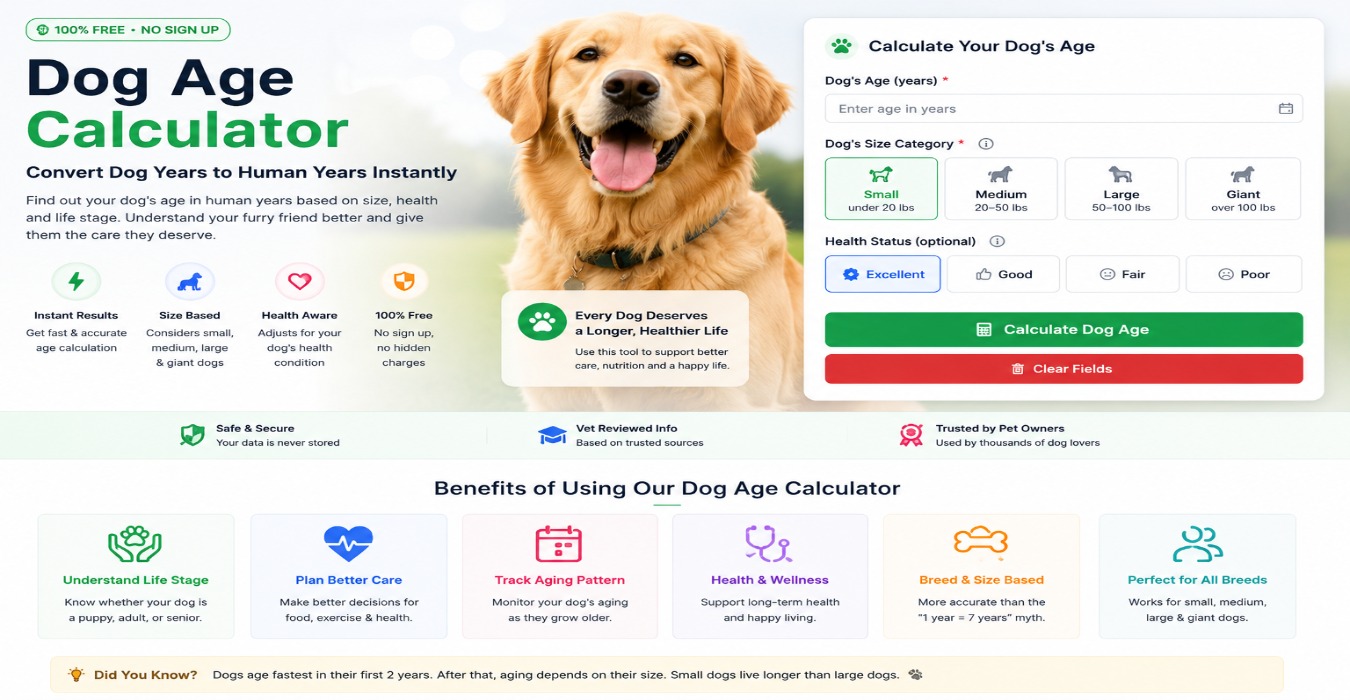
Use this free Dog Age Calculator to estimate your dog’s age in human years based on size category and life stage. This tool helps pet owners better understand how dogs age differently depending on breed size, health condition, nutrition, and lifestyle factors. Unlike the old “1 dog year = 7 human years” myth, modern dog aging calculations are more advanced and consider the fact that small, medium, large, and giant dog breeds age at different rates. Whether you own a puppy, adult dog, or senior dog, this calculator can help you estimate your dog’s approximate human age and understand its current life stage.
Why Use a Dog Age Calculator?
Dogs age much faster during their early years compared to humans. Their aging process also changes depending on breed size and overall health.
This calculator helps estimate:
- Dog age in human years
- Life stage category
- Breed size aging differences
- Senior dog awareness
- General pet care planning
Understanding your dog’s age can help support better feeding routines, exercise planning, veterinary care awareness, and long-term wellness decisions.
Dog Age Conversion Explained
The traditional “multiply by 7” method is not fully accurate for modern dog aging estimates.
Most dogs age rapidly during their first two years:
- First dog year ≈ 15 human years
- Second dog year ≈ 24 human years
- Additional years vary by breed size
Smaller dogs often live longer and age more slowly than larger or giant dog breeds.
Dog Size Categories & Aging Differences Small Dogs
Small dog breeds usually live longer and age more gradually after adulthood.
Examples:
- Chihuahua
- Pomeranian
- Yorkshire Terrier
Medium Dogs
Medium breeds typically have balanced growth and aging patterns.
Examples:
- Border Collie
- Bulldog
- Cocker Spaniel
Large Dogs
Large dogs often age faster during adulthood and senior stages.
Examples:
- Labrador Retriever
- German Shepherd
- Golden Retriever
Giant Dogs
Giant breeds usually have shorter lifespans and faster aging rates.
Examples:
- Great Dane
- Saint Bernard
- Mastiff
Dog Life Stages Puppy Stage
Young dogs experience rapid growth, development, and high energy levels.
Young Adult Stage
Dogs become more physically mature and active.
Adult Dog Stage
Most dogs enter a stable health and activity phase during adulthood.
Senior Dog Stage
Older dogs may require more veterinary care, joint support, lower-impact exercise, and adjusted nutrition.
Features of This Dog Age Calculator Human Age Estimation
Estimate your dog’s approximate human age using size-based aging calculations.
Breed Size Categories
Compare aging patterns for small, medium, large, and giant dogs.
Health Status Support
Optional health condition selection for general pet care awareness.
Instant Results
Get fast calculations without registration or downloads.
Mobile-Friendly Tool
Use the calculator on desktop, tablet, or mobile devices.
Simple & Easy to Use
Designed for everyday pet owners with a clean and beginner-friendly layout.
Benefits of Using a Dog Age Calculator Better Pet Care Awareness
Understanding life stages may help support better feeding, exercise, and wellness planning.
Senior Dog Monitoring
Identify when your dog may be entering senior years.
Educational Learning
Learn how dog aging differs between breed sizes.
Quick Estimation Tool
Avoid manual calculations and get instant estimates.
Everyday Pet Management
Useful for families, pet owners, rescue organizations, and dog lovers.
Factors That Can Affect Dog Aging
Several factors may influence how dogs age:
- Breed genetics
- Dog size
- Diet quality
- Exercise levels
- Veterinary care
- Weight management
- Lifestyle
- Health conditions
Actual aging may vary between individual dogs.
How to Use the Dog Age Calculator
- Enter your dog’s age in years
- Select the dog size category
- Choose optional health status
- Click “Calculate”
- View estimated human age and life stage results
Dog Nutrition & Healthy Aging
Balanced nutrition plays an important role in healthy aging for dogs.
Pet owners should focus on:
- healthy body weight
- proper hydration
- regular exercise
- quality dog food
- routine veterinary checkups
Senior dogs may require adjusted calorie intake, joint support, and specialized diets depending on breed and health condition.
Educational & Veterinary Disclaimer
This Dog Age Calculator is provided for educational and informational purposes only. Results are estimates and should not replace professional veterinary advice, diagnosis, or treatment.
Dog aging may vary depending on breed, genetics, medical history, lifestyle, and overall health condition.
Always consult a licensed veterinarian for medical or nutritional guidance related to your pet.
High-Authority References & Sources
1. American Veterinary Medical Association (AVMA)
The AVMA is one of the most recognized veterinary organizations in the United States, providing educational resources on pet health, nutrition, wellness, obesity management, and responsible pet care practices. The organization represents thousands of licensed veterinarians and publishes trusted veterinary guidance for pet owners and professionals.
Helpful Resources
2. Merck Veterinary Manual
The Merck Veterinary Manual is a globally recognized veterinary reference used by veterinarians, researchers, and animal health professionals. It contains detailed educational information on animal nutrition, disease management, feeding practices, growth stages, and preventive care for dogs, cats, and other animals.
Helpful Resources
3. American Animal Hospital Association (AAHA
AAHA publishes veterinary nutrition and weight management guidelines for dogs and cats. Their resources help support healthy feeding practices, obesity awareness, calorie management, and preventive pet healthcare.
Helpful Resource
AAHA Nutrition & Weight Management Guidelines
4. FDA Animal & Veterinary
The U.S. Food and Drug Administration provides official information about pet food safety, labeling standards, balanced nutrition, and animal health regulations. FDA resources help pet owners understand proper feeding practices and pet food labeling requirements.
Helpful Resource
5. Association of American Feed Control Officials (AAFCO)
AAFCO develops nutritional standards, ingredient definitions, and labeling guidelines for pet food products in the United States. Their standards are widely referenced across the pet nutrition industry.
Helpful Resources
Editorial Transparency Statement
This calculator and related educational content are intended for informational purposes only. Results provided by online pet calculators are estimates and should not replace professional veterinary advice, diagnosis, or treatment. Always consult a licensed veterinarian for medical, nutritional, or health-related concerns involving your pet.
Related Pet Calculators
- Pets Calculators Hub
- Dog Weight Calculator
- Dog Calorie Calculator
- Dog Water Intake Calculator
- Dog BMI Calculator
- Dog Feeding Calculator
- Dog Life Expectancy Calculator
- Cat Age Calculator
- Aquarium Tank Volume Calculator
Frequently Asked Questions (FAQ)
How old is a 1-year-old dog in human years?
Most 1-year-old dogs are roughly equivalent to about 15 human years.
Do small dogs live longer than large dogs?
Yes. Smaller dog breeds often live longer and age more slowly than giant breeds.
Is the 7 dog years rule accurate?
Not completely. Modern dog aging estimates are more advanced and consider size and life stage differences.
Can this calculator predict exact lifespan?
No. The calculator provides estimated age conversions only and cannot predict an exact lifespan.
Why do giant dogs age faster?
Large and giant dog breeds generally experience faster physical aging and shorter average lifespans compared to smaller breeds.