
The snow has been falling since dark, and he has stopped shaking — and that is the part that should frighten us. He is curled as small as a dog can make himself, pressed against his doghouse, his back white with snow his body no longer has the warmth to melt. Beside him, his water bowl is frozen solid — a disc of ice he licked at an hour ago and gave up on. Twenty feet away, a window glows warm and yellow. Inside that house it is winter. Out here, it is something else.
Every winter this same quiet scene plays out behind fences nobody looks over. So the question has to be asked plainly: should dogs be left outside in cold weather at all — and when a dog is left out in a snowstorm with frozen water and no real shelter, should that mean jail? This is his story — the story of the dog by the frozen bowl — and the honest answer, from vets and welfare experts, is one every dog owner needs before the cold arrives.
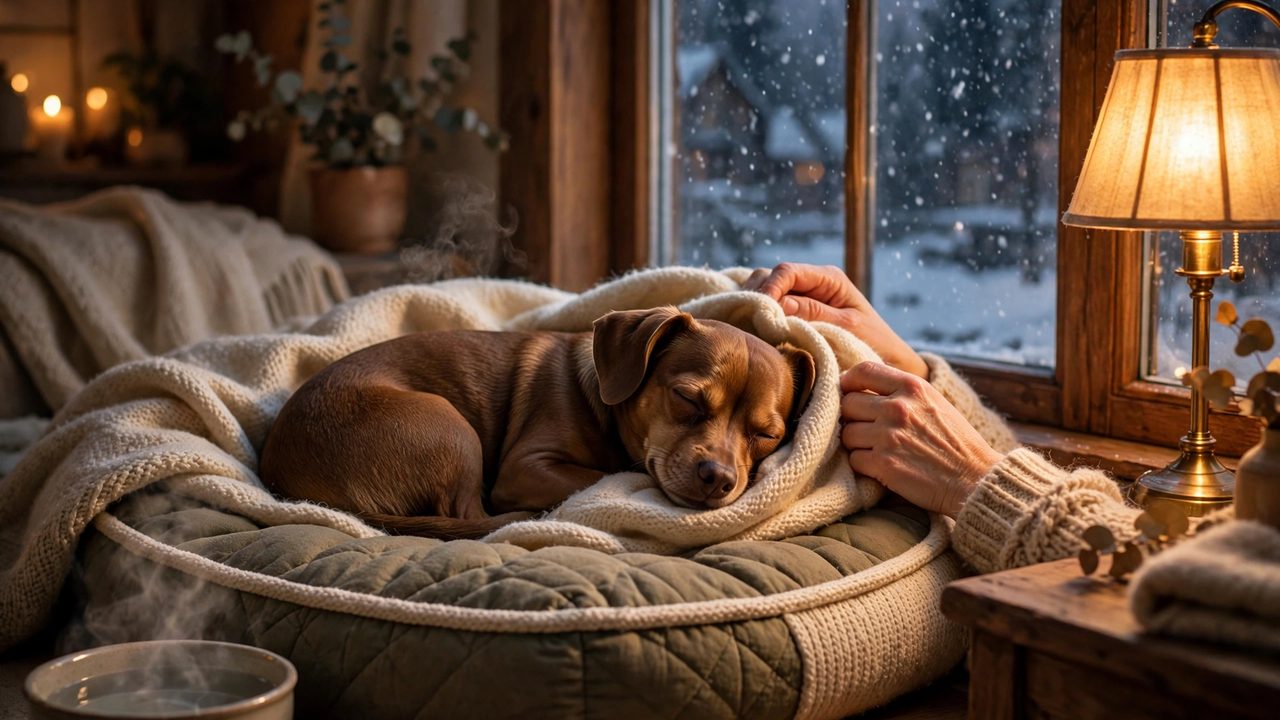
The images in this story are AI-generated illustrations, shared to honour a scene that plays out in real yards every winter — and to ask what we owe the dogs who wait in it.
The Dog by the Frozen Bowl: One Winter Night in One Ordinary Yard
He was not always an outside dog. Most dogs who end the winter in a yard began it on a sofa, as puppies passed from arm to arm, photographed, named, adored. Then the puppy grew. The chewing started, or the barking, or the landlord complained — and one ordinary day his bed moved to the porch, then to the yard, and the door stopped opening. A dog does not know what he did. He only knows the people on the other side of the glass are the same people he loves.
So he stays close, and he hopes, as dogs have done for thousands of years. Through the autumn he coped — a doghouse against the rain, a bowl filled most days. Dogs are stoics. They curl tighter and wait for the season to be kind again, because waiting faithfully for their people is the oldest skill their species owns.
Then the storm comes — the kind that sends everyone else home early. For the dog in the yard, the storm is wind driving snow through every gap in a thin wooden box, water that turned to ice before noon, cold that stops being uncomfortable and starts being a slow emergency. He cannot knock. He cannot ask. Everything he can do, he is already doing: enduring it, quietly, within sight of a warm window. What happens next is not up to him. It never was. It is up to the humans.
Should Dogs Be Left Outside in Cold Weather? What Cold Really Does to a Dog
Veterinary organisations are united on this, and their message strips away the myth that a fur coat makes a dog winter-proof. The American Veterinary Medical Association puts it plainly: cats and dogs should be kept inside during cold weather, because like people they are susceptible to frostbite and hypothermia — and no pet should be left outside for long periods in below-freezing weather. The ASPCA’s version is the one to tape to the fridge: if it is too cold for you, it is probably too cold for your pet.
Hypothermia is the slow thief. A dog loses body heat through his ears, tail, paws and belly — everywhere the fur is thin. As his core temperature falls, he shivers hard, then, worryingly, stops shivering as the cold wins. He becomes slow, weak, anxious; he may whine, stumble, or try to burrow into snow or bedding. Those are emergency signs, and a dog showing them needs to be brought inside and warmed gradually while a veterinarian is called.
Frostbite is the quiet injury. It strikes the delicate places — ear tips, tail tip, paw pads — where tissue can be damaged by freezing, sometimes without the dog showing pain until the thaw. Skin that looks pale, white or blue-grey and feels cold after freezing weather deserves a vet’s eyes the same day. And winter adds poisons: antifreeze, sweet-tasting and lethal in small amounts, pools in driveways; de-icing salts burn paws and are licked off afterwards. A dog left outside does not face one risk. He faces all of them, all night, alone.
Cold tolerance is individual — which is why “he’s fine” is a guess. Tolerance varies with coat, body fat, age and health. Puppies and elderly dogs regulate temperature poorly; thin and short-coated dogs chill fast. Dogs with diabetes, heart or kidney disease, or hormonal conditions can struggle to hold body temperature at all, and cold can worsen arthritis. There is no single safe temperature for “dogs” — only the dog in front of you, shivering or not.
Why Some Dogs Seem Fine Outside — and Why That Story Misleads
It is true that some dogs are built for winter. Thick-coated northern breeds can enjoy cold that would endanger a greyhound in minutes, and a healthy, well-fed dog with a proper insulated shelter is a different case from a short-haired dog beside a bare box. Context matters: working, farm and sled dogs around the world live outdoors well — because the people responsible for them treat shelter, bedding, food and water as a daily craft, not an afterthought.
But here is where the comforting story misleads: “seems fine” is usually judged from a doorway, by a dog doing the bravest thing he knows — wagging at the sight of his person. A dog’s joy at seeing you is not a thermometer. Dogs endure far past the point a human would complain, and they endure silently. The absence of crying is not the presence of comfort. The honest test is never “did he survive the night?” It is “would I call this a good night, for a being who trusts me completely?”
What Real Shelter Means When the Temperature Falls
If a dog must spend part of a winter day outside, shelter stops being a word and becomes a standard. Real shelter is insulated, raised off the frozen ground, small enough for his body heat to warm it, windproof at the door, with deep, dry bedding changed when damp — wet bedding in cold air is worse than none. It includes water that is not ice, refreshed through the day or kept in a heated bowl, because eating snow is no substitute for drinking.
Real shelter also means fuel. Staying warm burns energy, and the ASPCA’s winter guidance is explicit: pets burn extra energy trying to stay warm in wintertime, so feeding a little more can provide much-needed calories. How much more depends on the dog — his weight, his coat, how long he is out — which is why guesswork fails the dogs who need precision most. Our free Dog Feeding Calculator works out a sensible daily amount from your dog’s weight and lifestyle, so a winter increase is a plan rather than a shrug.
And real shelter has a limit. When a storm is forecast — when the temperature falls well below freezing and wind chill bites through a coat in minutes — the standard is not a better doghouse. The standard is a door, opened. A garage, a porch, a kitchen corner with an old blanket: none of it needs to be beautiful. The ASPCA asks only that a companion animal has a warm place to sleep, off the floor and away from drafts — and that no dog is left alone in a cold car either, because a parked car in winter acts like a refrigerator. In dangerous cold, indoors is not spoiling a dog. It is the duty his trust was always asking for.
The Winter Checklist: Bringing Compassion Home
Compassion only counts for a dog when it becomes a routine. These habits turn “I love my dog” into a winter he never has to merely endure.
- Bring them in when it is dangerous. Below-freezing weather, storms and bitter wind chill are indoor weather — full stop. Short toilet breaks and brief, watched play are a dog’s whole outdoor programme on those days.
- Shorten walks and read the dog. Cut walks short, watch for lifted paws, whining or slowing down, and head home at the first sign. Never let a dog off lead in a snowstorm — dogs can lose the scent and become lost in snow.
- Dress the dogs who need it. Small, thin, elderly and short-coated dogs benefit from a fitted coat or sweater with belly coverage. Keep a dry spare — a wet sweater chills instead of warms — and never shave a dog down to the skin in winter.
- Protect the paws. Massage a vet-approved paw protectant or petroleum jelly into pads before walks, or use booties; afterwards, wash and dry feet, legs and belly to remove ice, salt and chemicals.
- Feed and water for the season. Offer a little extra food in the coldest months and keep fresh, unfrozen water always available — a frozen bowl is the same as no bowl.
- Poison-proof the season. Clean up antifreeze spills immediately and keep de-icers out of reach. Even a small amount of antifreeze can kill; if you suspect your dog swallowed any, call a veterinarian at once.
- Make the warm place real. A bed off the floor, away from drafts, with a blanket he can arrange himself — and the company he actually waits for. Warmth, for a dog, is measured in people as much as in degrees.
And if the dog by the frozen bowl is not yours — the neighbour’s dog, behind the fence you pass every day — say something. Knock, kindly, and offer help before judgement: a spare blanket, a heated bowl, shelter on storm nights. If the dog is in danger and kindness changes nothing, tell local animal control or a humane organisation; in many places this is neglect under the law, and a report is the only knock on the door that dog will ever be able to make.
So, should someone who leaves a dog out in a bad snowstorm face jail? Readers will argue it in a hundred ways, and the argument itself does a dog somewhere some good. But underneath it sits the simpler truth: a dog cannot open the door himself. He cannot melt his own water or ask, in any words we will hear, to be let in. Everything between him and the storm is a person who decides. Who agrees every dog deserves a human who looks at the falling snow, looks at the yard — and opens the door?
Frequently Asked Questions
Should dogs be left outside in cold weather?
In dangerous cold, no. Veterinary guidance is that dogs should be kept inside during cold weather, and no dog should be left outside for long periods in below-freezing weather. Healthy, thick-coated dogs can spend limited, supervised time outside in milder winter weather with insulated shelter, dry bedding and unfrozen water — but storms and hard freezes are indoor weather for every dog.
How cold is too cold for a dog to stay outside?
There is no single number, because tolerance depends on coat, body fat, age, size and health. As a practical guide, when temperatures fall below freezing, unsupervised outdoor time should end; well below freezing, or with wind chill and snow, even brief exposure becomes risky. The ASPCA’s rule is the safest one: if it is too cold for you, it is probably too cold for your dog.
What are the signs of hypothermia and frostbite in dogs?
Watch for strong shivering that then stops, weakness, stumbling, anxiety or whining, and a dog trying to burrow into snow or bedding for warmth. Frostbite most often affects ear tips, tail and paws, where skin may look pale or blue-grey and feel cold. Bring the dog inside, warm him gradually with blankets, and contact a veterinarian the same day.
Can a doghouse keep a dog warm enough in winter?
A good doghouse helps in mild cold but has hard limits in a storm. It must be insulated, raised off the ground, windproof at the door, small enough to hold body heat, and filled with deep, dry bedding changed when damp. In below-freezing storms, no ordinary doghouse replaces bringing the dog indoors.
Which dogs are most at risk in cold weather?
Puppies, elderly dogs, small and thin dogs, and short-coated breeds chill fastest. Dogs with diabetes, heart disease, kidney disease or hormonal imbalances can struggle to regulate body temperature, and cold can worsen arthritis pain. Sick, underweight or very old dogs should never be left outside in cold weather — their indoor place is a medical need, not a luxury.
What should I do if I see a dog left outside in freezing weather?
Start with kindness: speak to the owner if safe, and offer practical help — bedding, a heated water bowl, or shelter on storm nights. If the dog is shivering, without unfrozen water or real shelter, and nothing changes, contact local animal control or a humane organisation and describe what you saw. In many places this is treated as neglect under local law.
References
- ASPCA — Cold Weather Safety Tips — keeping pets inside in the cold, feeding extra calories in winter, paw protection, antifreeze dangers and warm sleeping places.
- American Veterinary Medical Association (AVMA) — Pet Care Resources — responsible dog ownership, cold-weather safety and everyday care guidance for owners.
- American Kennel Club (AKC) — How to Keep Your Dog Warm and Safe This Winter — limiting time outside, winter coats for short-haired dogs, paw care and frostbite awareness.
- Merck Veterinary Manual — veterinary reference on dog health, temperature regulation and environmental care.
Keep Reading on Review And Decide
- Dog Care: Complete Guide for Dog Owners — our pillar guide to feeding, health, exercise, grooming and keeping the dog who trusts you safe in every season.
- Dog Feeding Calculator — work out your dog’s daily food and calories, including the little extra a cold winter honestly asks for.
- Dog Weight Calculator — check the healthy weight range for your dog, because a dog in good body condition faces winter with better reserves.
Disclaimer: This story and guide are for general education and emotional reflection only and are not a substitute for professional veterinary advice. Every dog is an individual — if you are worried about your dog’s health, cold exposure, behaviour or condition, please consult a qualified veterinarian who can examine your dog in person. If you believe an animal is in immediate danger, contact your local animal control or emergency services.