
Free Dog Feeding Calculator – Daily Food & Portion Guide
Use this free Dog Feeding Calculator to estimate daily food portions, calorie needs, meal frequency, and healthy feeding amounts based on your dog’s weight and activity level.
Fill Out The Fields Below
Dog Feeding Amount Calculator – Daily Calories & Food Portions
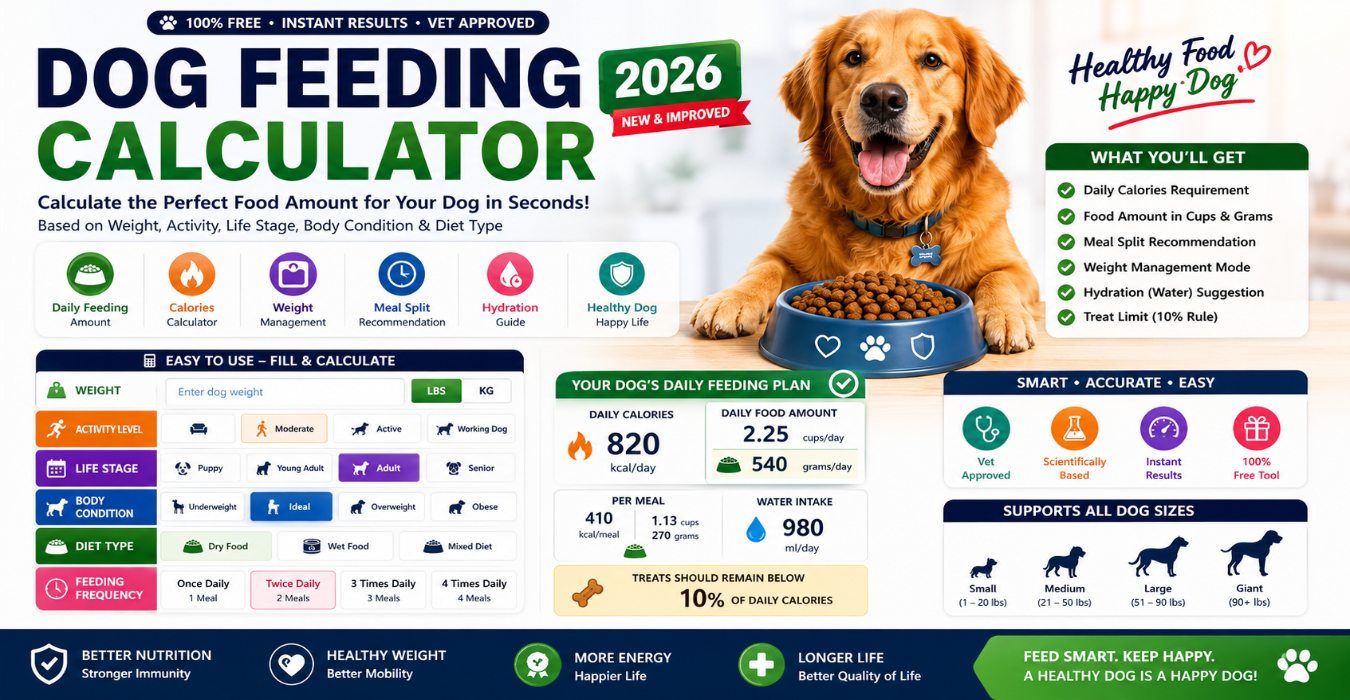 Keeping your dog healthy starts with proper nutrition and balanced daily feeding. This free Dog Feeding Calculator helps estimate how much food your dog may need each day based on weight, activity level, body condition, life stage, and diet type.
Whether you own a puppy, adult dog, senior dog, or active working breed, understanding proper feeding amounts can help support healthy weight management, energy levels, digestion, and long-term wellness.
Use the calculator above to estimate:
- Daily calories
- Food portions
- Cups per day
- Meal frequency
- Water intake suggestions
- Weight management feeding guidance
What Is a Dog Feeding Calculator?
A Dog Feeding Calculator is an online pet nutrition tool that estimates daily food requirements for dogs using factors such as:
- Body weight
- Activity level
- Life stage
- Feeding frequency
- Body condition
- Diet type
The calculator helps pet owners better understand feeding portions and approximate calorie needs for everyday pet care planning.
How Much Should You Feed a Dog?
There is no single feeding amount that works for every dog. Feeding needs vary depending on:
- Breed size
- Weight
- Age
- Activity level
- Metabolism
- Health condition
- Food quality
For example:
- Active dogs usually require more calories.
- Senior dogs may require fewer calories.
- Puppies generally need more food relative to body weight.
- Overweight dogs may require portion adjustments.
Using a feeding calculator can provide a useful starting estimate for daily feeding amounts.
Dog Feeding Chart by Weight
Below is a general feeding estimate for adult dogs using dry food.
| Dog Weight | Estimated Calories | Approximate Dry Food |
|---|---|---|
| 5 lbs | 180–250 kcal | 1/2 – 3/4 cup |
| 10 lbs | 300–400 kcal | 3/4 – 1 cup |
| 20 lbs | 500–700 kcal | 1 – 1.5 cups |
| 40 lbs | 900–1200 kcal | 2 – 3 cups |
| 60 lbs | 1300–1600 kcal | 3 – 4 cups |
| 80+ lbs | 1700–2400 kcal | 4 – 6 cups
|
Actual feeding needs may vary depending on food calorie density and veterinary recommendations.
Puppy Feeding Guide
Puppies require more calories and nutrients than adult dogs because they are actively growing.
Puppy feeding usually depends on:
- Breed size
- Growth stage
- Activity level
- Food quality
General puppy feeding tips:
- Feed smaller meals multiple times daily
- Use high-quality puppy food
- Monitor weight regularly
- Avoid overfeeding
Many puppies eat:
- 3–4 meals daily during early growth
- 2–3 meals daily as they mature
Adult Dog Feeding Guide
Healthy adult dogs generally require balanced maintenance calories to support:
- Muscle maintenance
- Energy
- Daily activity
- Healthy body weight
Adult feeding routines often include:
- 1–2 meals daily
- Portion control
- Regular exercise
- Healthy treats in moderation
Senior Dog Feeding Recommendations
Older dogs may experience:
- Lower activity levels
- Slower metabolism
- Reduced muscle mass
- Joint issues
Senior feeding plans often focus on:
- Controlled calories
- Lean protein
- Digestive support
- Weight management
Some senior dogs may benefit from smaller, easier-to-digest meals.
Dry Food vs Wet Food
Different diet types may affect feeding amounts and calorie intake.
Dry Food
Benefits:
- Convenient storage
- Lower cost
- Crunch texture may help dental hygiene
Wet Food
Benefits:
- Higher moisture content
- Easier chewing
- Strong flavor appeal
Mixed Feeding
Some owners combine dry and wet food for:
- Variety
- Texture balance
- Hydration support
Always review calorie information on dog food labels.
Dog Calorie Needs Explained
Daily calorie needs are influenced by:
- Body weight
- Exercise
- Breed
- Age
- Health condition
- Reproductive status
Highly active dogs may require significantly more calories than low-activity indoor dogs.
Examples:
- Working dogs
- Sporting breeds
- Herding breeds
These dogs often burn more energy daily.
Signs of Overfeeding
Common signs may include:
- Weight gain
- Fat accumulation
- Reduced waist visibility
- Low energy
- Difficulty feeling ribs
Long-term overfeeding may contribute to obesity-related health issues.
Signs of Underfeeding
Possible signs include:
- Visible ribs
- Muscle loss
- Low energy
- Excessive hunger
- Weight loss
Dogs showing unusual weight changes should be evaluated by a veterinarian.
Healthy Dog Nutrition Tips
Helpful daily feeding practices:
- Use consistent meal schedules
- Avoid excessive treats
- Provide clean drinking water
- Monitor body condition regularly
- Use quality dog food
- Encourage daily exercise
Balanced nutrition plays an important role in overall pet wellness.
How Often Should Dogs Eat?
Meal frequency may vary depending on:
- Age
- Breed size
- Health
- Activity level
Typical feeding schedules:
- Puppies: 3–4 meals/day
- Adult dogs: 1–2 meals/day
- Seniors: 2 smaller meals/day
Some dogs may require specialized feeding schedules recommended by veterinarians.
Dog Weight Management Feeding Tips
Weight management may require:
- Portion control
- Reduced treats
- Increased exercise
- Higher protein diets
- Consistent calorie monitoring
Healthy weight management supports:
- Joint health
- Mobility
- Heart health
- Longevity
Benefits of Using a Dog Feeding Calculator
Using a feeding calculator may help:
- Estimate daily food portions
- Monitor calorie intake
- Support healthy body condition
- Improve feeding consistency
- Understand hydration needs
- Reduce overfeeding risks
These tools are useful for everyday pet care planning.
Why Dog Feeding Amounts Matter
Proper feeding supports:
- Healthy growth
- Energy levels
- Weight balance
- Muscle maintenance
- Digestive health
- Overall quality of life
Even small portion adjustments may affect long-term health.
Educational Disclaimer
This Dog Feeding Calculator is provided for general educational and informational purposes only. Feeding estimates may vary depending on breed, metabolism, food brand, medical conditions, and veterinary recommendations.
This calculator should not replace professional veterinary advice, diagnosis, or treatment.
Always consult a licensed veterinarian for personalized feeding recommendations and health concerns.
Related Dog Health Calculators
- Dog Weight Calculator
- Pets Calculators Hub
- Dog Years to Human Years Calculator
- Dog Age Calculator
- Dog BMI Calculator
- Dog Life Expectancy Calculator
High-Authority References & Sources
1. American Veterinary Medical Association (AVMA)
The American Veterinary Medical Association is one of the most trusted veterinary organizations in the United States. AVMA provides:
- Veterinary care guidelines
- Pet health education
- Animal wellness resources
- Veterinary ethics and standards
- Clinical information for pet owners and veterinarians
AVMA is widely referenced for:
- Dog health
- Cat care
- Pet nutrition
- Preventive veterinary medicine
- Animal wellness recommendations
Useful Resources:
2. Association of American Feed Control Officials (AAFCO)
The Association of American Feed Control Officials helps establish standards for:
- Pet food labeling
- Animal feed ingredients
- Nutritional guidelines
- Feeding standards
- Ingredient definitions
AAFCO plays an important role in:
- Dog food regulations
- Cat food nutrition standards
- Pet feeding guidelines
- Ingredient safety information
Useful Resources:
3. FDA Animal & Veterinary
The FDA Center for Veterinary Medicine regulates:
- Animal food
- Pet food safety
- Veterinary drugs
- Animal supplements
- Animal health products
FDA veterinary resources help provide educational information about:
- Pet food safety
- Animal medications
- Veterinary regulations
- Safe feeding practices
- Approved animal drugs
Useful Resources:
- FDA Regulation of Pet Food
- Animal Foods & Feeds
- Approved Animal Drug Products (Green Book)
- Center for Veterinary Medicine (CVM)
4. American Animal Hospital Association (AAHA)
The American Animal Hospital Association is known for:
- Veterinary hospital accreditation
- Pet wellness guidelines
- Preventive care standards
- Canine and feline healthcare recommendations
AAHA resources are often referenced for:
- Preventive dog care
- Nutrition guidance
- Senior pet health
- Weight management
- Vaccination schedules
5. Merck Veterinary Manual
The Merck Veterinary Manual is a globally recognized veterinary medical reference covering:
- Animal diseases
- Pet nutrition
- Veterinary diagnostics
- Clinical treatment information
- Preventive care
Veterinarians and pet owners commonly use this resource for evidence-based veterinary education.
6. World Small Animal Veterinary Association (WSAVA)
The World Small Animal Veterinary Association provides international veterinary guidelines for:
- Dog nutrition
- Cat nutrition
- Weight management
- Clinical wellness standards
- Companion animal healthcare
WSAVA nutrition guidelines are commonly referenced in:
- Pet feeding tools
- Dog calorie calculators
- Weight management resources
- Veterinary nutrition education
Conclusion
Proper feeding is one of the most important parts of responsible pet care. This free Dog Feeding Calculator helps estimate daily food portions, calorie needs, meal schedules, and hydration recommendations based on your dog’s lifestyle and body condition.
Use the calculator regularly to support healthy feeding habits, balanced nutrition, and long-term pet wellness.
Frequently Asked Questions (FAQ)
How much food should I feed my dog daily?
Daily feeding amounts depend on your dog’s weight, activity level, age, metabolism, and diet type. A dog feeding calculator can help estimate suitable daily portions.
Can this calculator estimate dog calories?
Yes. The calculator estimates approximate daily calorie needs based on weight, body condition, and activity level.
How often should dogs eat each day?
Most adult dogs are commonly fed 1–2 meals daily, while puppies may require 3–4 smaller meals per day.
Does dog breed affect feeding amounts?
Yes. Different breeds naturally have different body sizes, energy levels, and nutritional requirements.
Can active dogs require more food?
Yes. Highly active or working dogs may burn more calories and often require larger feeding portions.
Is wet food better than dry food?
Both dry and wet food can support healthy nutrition depending on ingredient quality, calorie content, and veterinary recommendations.
Can dogs become overweight from overfeeding?
Yes. Excess calorie intake combined with low activity levels may contribute to unhealthy weight gain and obesity.
Is this dog feeding calculator accurate?
The calculator provides general educational estimates only. Actual feeding needs may vary depending on health conditions, metabolism, and food brand calorie density.
Can this calculator replace veterinary advice?
No. This tool is intended for informational and educational purposes only and should not replace professional veterinary guidance.
Why is hydration important for dogs?
Proper hydration supports digestion, temperature regulation, energy levels, and overall health in dogs.