AI Tools for Beginners (2026) – Start Without Skills or Experience, Simple Tools for Everyday Use
Discover the best AI tools for beginners in 2026. Learn simple, practical tools for writing, images, video, and productivity—no technical skills required. Start using AI the smart way today.
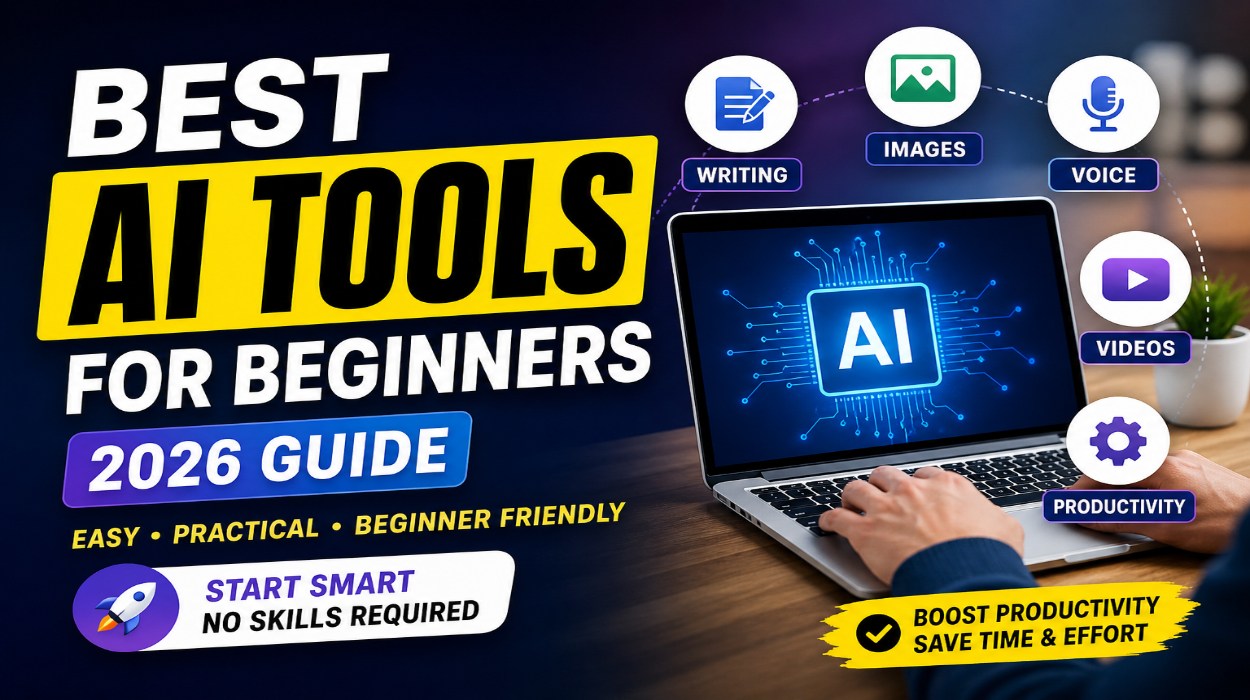
Artificial Intelligence (AI) is no longer limited to developers or tech experts. In 2026, AI tools have become part of everyday life — from writing emails to creating videos, designing graphics, and automating tasks.
But for beginners, the biggest challenge is still the same:
👉 Where should I start?
👉 Which AI tools are actually easy to use?
👉 Do I need technical skills or coding knowledge?
If you’ve ever felt overwhelmed by AI, this guide is designed specifically for you.
This is not a hype-based list. Instead, this is a practical, beginner-focused guide that helps you:
✔️ Understand AI tools in simple language
✔️ Start using them without confusion
✔️ Choose tools based on real-life use cases
✔️ Connect AI tools with daily productivity
For example, users looking for planning support can use pregnancy tracking tools combined with AI insights.
What Are AI Tools? (Simple Explanation for Beginners)
AI tools are software applications that use machine learning and automation to perform tasks that normally require human intelligence.
These tools can:
- Write content
- Generate images
- Convert speech to text
- Create videos
- Automate repetitive tasks
- Analyze data
For beginners, the key benefit is simple:
👉 AI tools save time and reduce effort
You don’t need coding skills. Most modern AI tools are designed with user-friendly interfaces where you simply:
- Enter input (text, image, audio)
- Click a button
- Get instant results
Why AI Tools Matter in 2026
AI is not just a trend anymore — it’s becoming a basic digital skill.
Here’s why beginners should start learning AI tools today:
1. Time Efficiency
Tasks that used to take hours can now be done in minutes.
2. Accessibility
Most tools are beginner-friendly and don’t require technical knowledge.
3. Cost-Effective
Many tools offer free plans or low-cost entry options.
4. Skill Enhancement
AI doesn’t replace skills — it enhances them.
5. Online Opportunities
From freelancing to content creation, AI tools open new earning possibilities.
How Beginners Should Start Using AI Tools
Before jumping into tools, it’s important to follow a smart approach.
✔️ Start Simple
Don’t try to learn everything at once. Begin with one category like writing or image tools.
✔️ Focus on Use Cases
Choose tools based on your needs:
- Writing → AI writing tools
- YouTube → video + voice tools
- Blogging → SEO + content tools
Before writing, beginners can find content Keyword Idea using simple keyword tools to improve their content strategy.
✔️ Practice Daily
AI tools improve with better input. The more you use them, the better results you get.
✔️ Use Free Versions First
Test tools before investing money.
Best AI Tools for Beginners (2026)
Below are categorized tools that are easy to use, widely trusted, and practical for everyday use.
1. AI Writing Tools (Content Creation Made Easy)
Writing is one of the easiest entry points for beginners.
Tools:
- ChatGPT
- Grammarly
What You Can Do:
- Blog writing
- Social media captions
- Emails and messages
- Scripts for YouTube
Why It’s Beginner-Friendly:
- Simple input → instant output
- No technical setup required
- Works in multiple languages
2. AI Image Tools (Create Visual Content Easily)
Visual content is essential for social media, blogs, and ads.
Tools:
- Canva
- DALL·E
Use Cases:
- Social media posts
- Thumbnails
- Ads creatives
- Blog images
Beginner Advantage:
- Drag-and-drop interface
- Templates available
- No design experience needed
3. AI Voice & Audio Tools (Convert Voice and Text)
These tools are perfect for content creators and students.
Tools:
- ElevenLabs
- Otter.ai
Use Cases:
- Voiceovers for videos
- Podcast creation
- Lecture transcription
- Subtitles
4. AI Video Tools (Create Videos Without Editing Skills)
Video content is booming, and AI tools make it easier than ever.
Tools:
- Pictory
- Synthesia
Use Cases:
- Faceless YouTube videos
- Marketing videos
- Educational content
For practical use, beginners can easily convert text into voice using simple online tools without needing recording equipment.
5. AI Productivity Tools (Automate Your Workflow)
These tools help you stay organized and efficient.
Tools:
- Notion AI
- Zapier
Use Cases:
- Task management
- Workflow automation
- Notes and planning
How AI Tools Connect with Daily Life
AI is not just for professionals — it can improve everyday tasks.
Students
- Notes summarization
- Assignment writing
- Lecture transcription
Content Creators
- Script writing
- Voiceovers
- Thumbnail creation
Freelancers
- Client communication
- Project management
- Content delivery
Bloggers
- SEO content
- Image optimization
- Content structuring
You can also convert audio to text for lectures, meetings, or content creation using beginner-friendly transcription tools.
Internal Tools You Can Use on ReviewAndDecide
To make AI even more practical, you can combine it with simple online tools.
Examples:
👉 Convert audio to text → MP3 to Text Converter
👉 Create voice from text → Text to Speech Tool
👉 Optimize images → Image Resizer Tool
These tools help you turn AI output into usable content.
Common Mistakes Beginners Should Avoid
❌ Using Too Many Tools at Once
Stick to 1–2 tools initially.
❌ Expecting Perfect Results
AI gives drafts — you improve them.
❌ Ignoring Practice
Better prompts = better results.
❌ Relying Fully on AI
Human editing is still important.
AI Tools Reality Check (Important for Beginners)
AI tools are powerful — but they are not magic.
✔️ They assist, not replace
✔️ Results depend on input quality
✔️ Learning is still required
Understanding this helps avoid unrealistic expectations.
Future of AI Tools for Beginners
AI tools are evolving rapidly.
In the near future:
- More automation will become available
- Tools will become easier to use
- Integration between tools will increase
Beginners who start today will have an advantage.
How to Choose the Right AI Tool
When selecting tools, consider:
✔️ Ease of use
✔️ Free vs paid options
✔️ Your specific needs
✔️ Output quality
Step-by-Step Beginner Workflow (Practical Guide)
Here’s a simple workflow you can follow:
- Choose a task (e.g., blog writing)
- Use AI tool for draft
- Edit and improve content
- Use additional tools (image, audio, etc.)
- Publish or use output
Policy Declaration
This content is created for educational and informational purposes only. It is designed to help users understand AI tools in a practical and responsible way.
Transparency & Scientific Context
AI tools mentioned in this guide are selected based on usability, accessibility, and beginner-friendliness — not hype or unrealistic claims.
Evidence-Based Position
Research and industry trends consistently show that AI improves productivity when used correctly. However, it requires human input and judgment.
What Science Consistently Emphasizes
- Technology enhances efficiency
- Human decision-making remains critical
- Learning and adaptation are essential
Where AI Tools Fit (Contextual Clarification)
AI tools are best used as:
✔️ Assistants
✔️ Productivity enhancers
✔️ Creative support systems
Research Methodology
This guide is based on:
- Industry trends
- Tool usability analysis
- Beginner experience considerations
Editorial Transparency Statement
We aim to provide neutral, helpful, and practical guidance. This content avoids exaggerated claims and focuses on real-world usability.
Educational Intent Disclaimer
This guide does not guarantee results. Outcomes depend on user effort, consistency, and learning approach.
Medical / Professional Disclaimer
This content does not replace professional advice. Always use tools responsibly.
🎯 Want to Start with Simple Tools?
Explore beginner-friendly tools designed to make everyday tasks easier.
👉 Browse Tools & Guides on ReviewAndDecide
⚠️ Results depend on individual usage and consistency.
Frequently Asked Questions (FAQ)
Are AI tools free for beginners?
Many AI tools offer free plans with limited features, which are enough for beginners.
Which AI tool is easiest to start with?
Writing tools like ChatGPT are among the easiest to use.
Can AI tools help earn money?
AI tools can support online work, but income depends on skills and effort.
Do I need technical skills?
No, most beginner AI tools are designed for non-technical users.
Are AI tools safe to use?
Generally yes, but users should avoid uploading sensitive or private data.
Final Thoughts
AI tools are not just for experts anymore.
With the right approach, beginners can:
✔️ Learn faster
✔️ Work smarter
✔️ Create better content
To discover more beginner-friendly solutions for everyday tasks, you can explore smart tools on ReviewAndDecide designed to simplify digital workflows.
Educational Purpose Disclaimer
This content is provided for educational and informational purposes only. It is intended to help users understand AI tools and their practical applications in everyday digital tasks.
No Guaranteed Results
The use of AI tools does not guarantee specific results. Outcomes may vary based on individual usage, experience, skill level, and consistency. Users should approach these tools as productivity aids rather than guaranteed solutions.
Not Professional Advice
This content does not constitute professional, financial, or technical advice. Users are encouraged to conduct their own research before making decisions related to tools, platforms, or digital workflows.
Tool Usage Responsibility
Users are responsible for how they use AI tools. It is recommended to avoid uploading sensitive, private, or confidential information to any online platform.
Third-Party Tools & Services
This article may reference third-party tools and platforms such as ChatGPT, Canva, or ElevenLabs. We do not control or guarantee the performance, availability, or policies of these external services.
Transparency & Fair Use
We aim to provide unbiased and practical information. Any recommendations are based on usability and general user experience rather than promotional claims.
Privacy & Data Awareness
Users should review the privacy policies of any AI tool they use. For general guidance on online privacy and data protection, refer to the Google Privacy & Safety Center.
AdSense & Content Compliance Note
This content follows general content quality and policy standards for user safety, transparency, and non-deceptive practices. We avoid exaggerated claims and focus on realistic, educational information.
References & Sources
📊 1. AI & Productivity Research
🔹 Harvard Business Review
Why it matters:
This source explains how AI and automation improve productivity by reducing repetitive tasks and enhancing efficiency in modern workflows.
Use in article:
Supports the idea that AI tools help save time and streamline everyday digital tasks.
💼 2. Workplace Productivity Insights
🔹 Microsoft Productivity Insights
Why it matters:
Microsoft’s research highlights how digital tools and AI-driven systems improve collaboration, efficiency, and performance in work environments.
Use in article:
Reinforces the role of AI tools for students, freelancers, and teams.
3. Google Search & Content Guidelines
🔹 Google Search Central
Why it matters:
Google emphasizes creating helpful, people-first, and trustworthy content that provides real value to users.
Use in article:
Supports the importance of writing educational, non-hype, and user-focused content.
4. AdSense & Content Policy
🔹 Google AdSense
Why it matters:
AdSense policies require content to be transparent, accurate, and free from misleading claims.
Use in article:
Justifies avoiding exaggerated promises, income guarantees, or deceptive messaging.
5. Privacy & Data Safety
🔹 Google Privacy & Safety Center
Why it matters:
Provides guidance on protecting personal data and using online tools responsibly.
Use in article:
Supports recommendations to avoid uploading sensitive or private information to AI tools.
6. Copyright & Content Usage
🔹 U.S. Copyright Office
Why it matters:
Explains legal considerations related to content ownership, usage rights, and intellectual property.
Use in article:
Supports the importance of using only content that users have the right to use or distribute.
7. AI & Global Impact
🔹 World Economic Forum
Why it matters:
Highlights how AI is shaping the future of jobs, digital skills, and the global economy.
Use in article:
Supports the idea that learning AI tools is becoming an essential future skill.