
Free Dog BMI Calculator – Dog Weight & Body Condition Checker
Use this free Dog BMI Calculator to check your dog’s body condition score, healthy weight range, obesity risk, and daily wellness estimates online.
Fill Out The Fields Below
Dog Health Calculator (2026) – BMI, Weight & Obesity Check
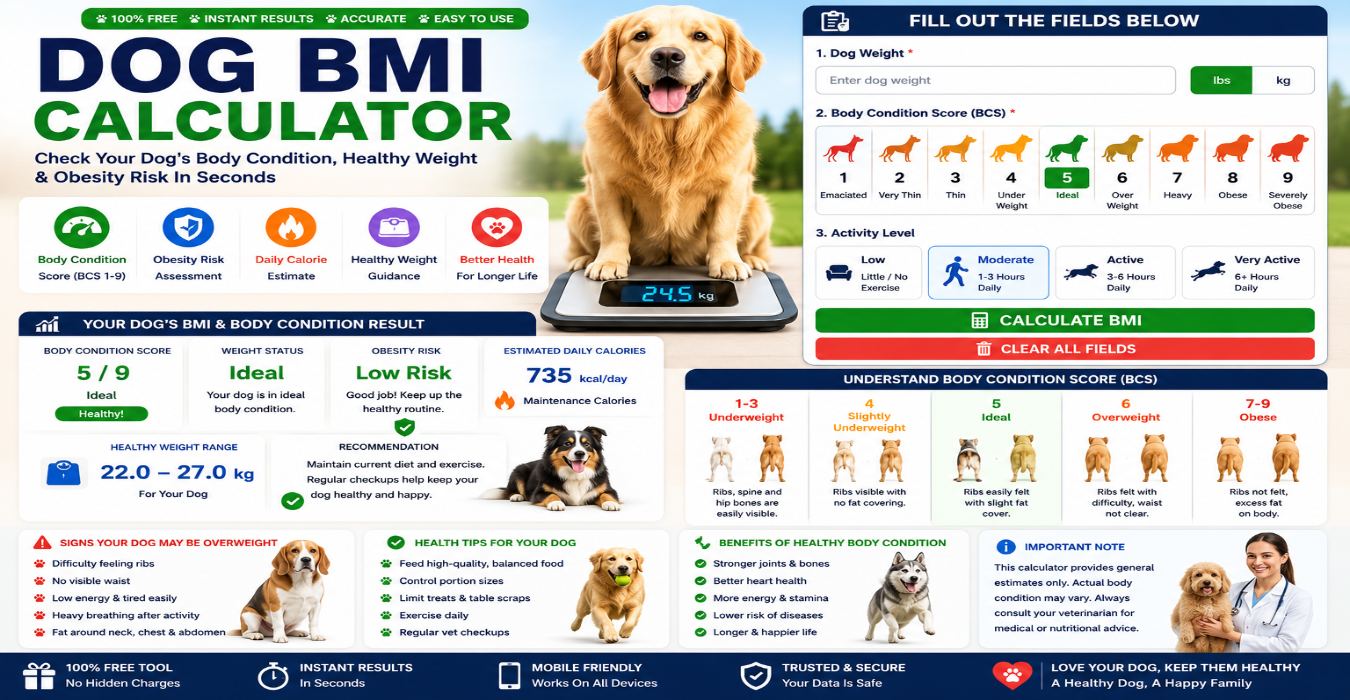 Use this free Dog BMI Calculator to estimate your dog’s body condition score, healthy weight status, obesity risk, and overall body composition. This online tool helps pet owners better understand whether a dog may be underweight, healthy, overweight, or obese using weight and Body Condition Score (BCS) guidance.
Maintaining a healthy body condition is important for mobility, heart health, joint support, energy levels, and long-term wellness in dogs.
Dog BMI Calculator (2026)
Use this free Dog BMI Calculator to estimate your dog’s body condition score, healthy weight status, obesity risk, and overall body composition. This online tool helps pet owners better understand whether a dog may be underweight, healthy, overweight, or obese using weight and Body Condition Score (BCS) guidance.
Maintaining a healthy body condition is important for mobility, heart health, joint support, energy levels, and long-term wellness in dogs.
What Is a Dog BMI Calculator?
A Dog BMI Calculator is an online tool used to estimate a dog’s body condition and general weight health based on:
- body weight
- Body Condition Score (BCS)
- activity level
- body composition indicators
Unlike human BMI systems, dogs are usually evaluated using a Body Condition Score scale because breed structure and body shape vary significantly between dogs.
This calculator provides educational estimates to help dog owners monitor healthy body condition awareness.
What Is Dog Body Condition Score (BCS)?
Veterinarians commonly use a Body Condition Score system to assess whether a dog is:
- underweight
- ideal weight
- overweight
- obese
The most common scale ranges from 1 to 9.
Dog BCS Scale
| Score | Condition |
|---|---|
| 1 | Emaciated |
| 2 | Very Thin |
| 3 | Thin |
| 4 | Underweight |
| 5 | Ideal |
| 6 | Overweight |
| 7 | Heavy |
| 8 | Obese |
| 9 | Severely Obese |
A healthy dog is usually near:
BCS 4–5
Why Dog BMI & Body Condition Matter
Healthy body condition affects:
- mobility
- joint health
- heart function
- breathing
- energy levels
- quality of life
- lifespan support
Dogs carrying excess weight may experience increased stress on:
- joints
- hips
- knees
- spine
- cardiovascular system
Maintaining healthy body condition is an important part of responsible pet care.
Features of This Dog BMI Calculator
Body Condition Score Analysis
Estimate whether your dog may be:
- underweight
- ideal
- overweight
- obese
Obesity Risk Estimate
View general obesity risk guidance.
Daily Calorie Estimate
Estimate maintenance calorie needs based on:
- body weight
- activity level
Activity Level Support
Adjust calculations using:
- low activity
- moderate activity
- active
- very active
Weight Wellness Guidance
Receive general educational recommendations for:
- exercise
- calorie awareness
- healthy weight management
Mobile-Friendly Tool
Use the calculator on desktop, tablet, or mobile devices.
How Dog BMI Is Different From Human BMI
Human BMI uses:
- height
- weight
Dogs have very different:
- body shapes
- muscle structures
- breed proportions
Because of this, veterinarians use Body Condition Scoring systems rather than traditional human BMI formulas.
Signs Your Dog May Be Overweight
Common signs may include:
- difficulty feeling ribs
- reduced waistline visibility
- low activity
- slower movement
- heavy breathing after exercise
- excessive body fat
- reduced endurance
Signs Your Dog May Be Underweight
Possible signs:
- visible ribs
- low muscle mass
- low energy
- poor coat condition
- noticeable spine or hips
- loss of appetite
Dog Obesity Risks
Excess body fat may increase risks of:
- arthritis
- diabetes complications
- heart strain
- breathing difficulties
- joint damage
- reduced mobility
- lower quality of life
Weight management can play an important role in long-term pet wellness.
Healthy Dog Weight Tips
Balanced Nutrition
Feed quality dog food appropriate for:
- age
- breed
- activity level
Portion Awareness
Avoid overfeeding and excessive treats.
Daily Exercise
Regular walks and physical activity may support healthy weight management.
Routine Monitoring
Monitor body condition regularly.
Veterinary Wellness Visits
Professional veterinary evaluations remain important for long-term health.
How to Use the Dog BMI Calculator
- Enter your dog’s current weight
- Select weight unit (lbs or kg)
- Choose your dog’s Body Condition Score
- Select activity level
- Click “Calculate”
- View estimated body condition results
Understanding Dog Body Fat
Dogs naturally store body fat differently depending on:
- breed
- genetics
- metabolism
- age
- activity level
Lean athletic breeds may naturally appear slimmer than heavier working breeds.
Ideal Body Shape for Dogs
Healthy dogs generally have:
- visible waistline
- abdominal tuck
- palpable ribs without excessive fat
- balanced muscle tone
Puppy vs Adult Dog Weight Differences
Puppies grow rapidly and should not always be evaluated using adult weight expectations.
Growth rates vary based on:
- breed size
- nutrition
- genetics
- activity level
Large breed puppies mature more slowly than smaller breeds.
Senior Dog Weight Management
Older dogs may experience:
- slower metabolism
- reduced activity
- muscle loss
- joint stiffness
Senior dogs often benefit from:
- controlled calorie intake
- moderate exercise
- weight monitoring
- regular veterinary care
Benefits of Using a Dog BMI Calculator
Better Weight Awareness
Understand general body condition estimates.
Early Obesity Awareness
Identify possible overweight concerns earlier.
Educational Pet Care Tool
Learn more about healthy dog body composition.
Everyday Wellness Support
Helpful for families, dog owners, shelters, breeders, and pet care learners.
Simple Online Access
No signup or installation required.
Factors That Affect Dog Weight & BMI
Many factors influence healthy body condition:
- breed size
- metabolism
- genetics
- age
- activity level
- muscle mass
- diet quality
- health conditions
Healthy weight varies between individual dogs.
Dog Weight Management Tips
Reduce Excess Treats
Treats should remain moderate.
Increase Physical Activity
Regular walking and play may help maintain healthy body condition.
Monitor Calorie Intake
Avoid excessive calorie consumption.
Maintain Routine Feeding
Consistent feeding schedules may support healthy weight control.
Educational & Veterinary Disclaimer
This Dog BMI Calculator is intended for educational and informational purposes only. Results are estimates and should not replace professional veterinary advice, diagnosis, or treatment.
Body condition, obesity risk, and healthy weight may vary depending on breed, genetics, muscle mass, medical history, and individual health conditions.
Always consult a licensed veterinarian for accurate medical and nutritional guidance related to your dog.
High-Authority References & Sources
American Veterinary Medical Association (AVMA)
Merck Veterinary Manual
American Animal Hospital Association (AAHA)
FDA Animal & Veterinary
Association of American Feed Control Officials (AAFCO)
Related Dog Health Calculators
- Dog Weight Calculator
- Pets Calculators Hub
- Dog Years to Human Years Calculator
- Dog Age Calculator
- Dog Life Expectancy Calculator
Frequently Asked Questions (FAQ)
What is a healthy BMI for a dog?
Dogs are usually evaluated using Body Condition Scores instead of traditional human BMI systems. Most healthy dogs fall near BCS 4–5.
Can dogs become obese?
Yes. Excess calorie intake and low activity levels may contribute to obesity in dogs.
Is Body Condition Score accurate?
BCS is commonly used by veterinarians as a general body condition assessment method.
Can small dogs become overweight?
Yes. Small breeds may also become overweight if calorie intake exceeds activity levels.
Does breed affect dog body condition?
Yes. Different breeds naturally have different body structures and healthy weight ranges.
Can this calculator replace veterinary advice?
No. This tool is educational only and should not replace professional veterinary evaluation.