
Dog Weight Loss Calculator Complete Guide 2026 – Safe Dog Weight Planner
Use this free Dog Weight Loss Calculator to estimate safe calorie reduction, feeding portions, target weight goals, and healthy dog weight management plans.
Fill Out The Fields Below
Dog Weight Management Calculator – Healthy Feeding Plan
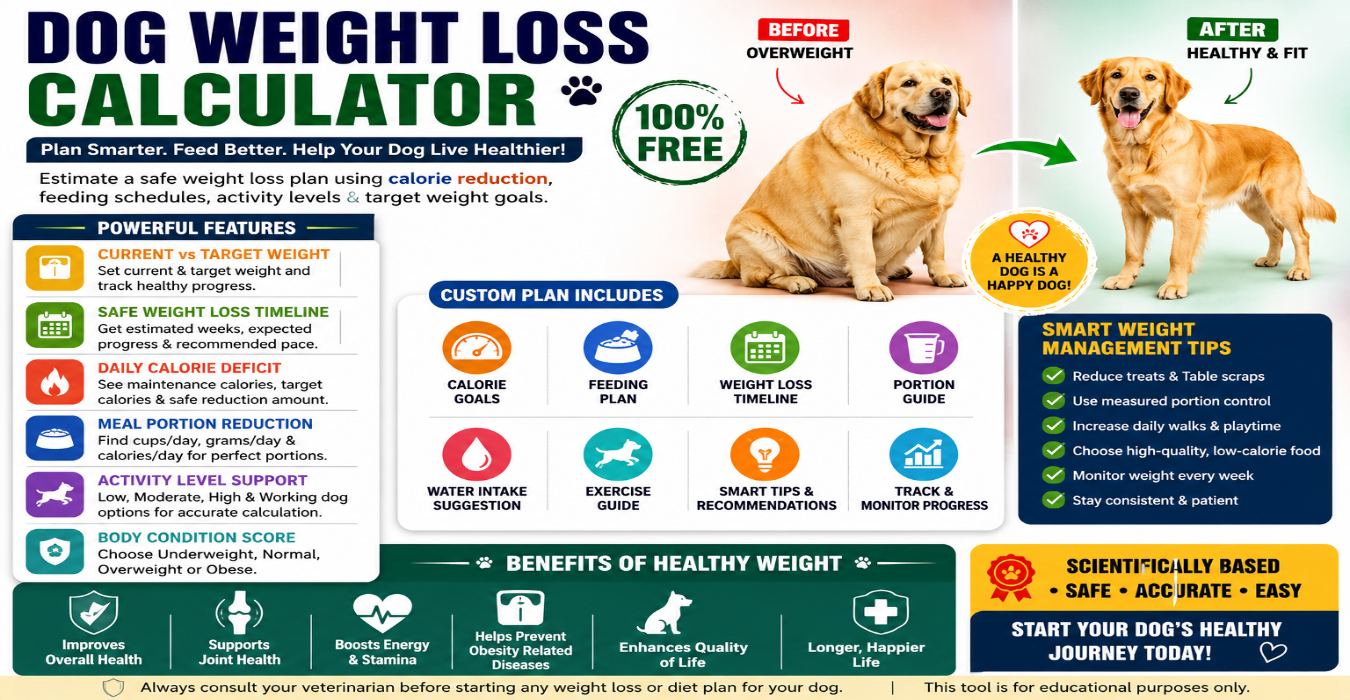 Estimate a safe dog weight loss plan using calorie reduction, feeding schedules, activity levels, and target weight goals.
Dog obesity has become one of the most common pet health concerns worldwide. Many dogs gain excess weight because of overfeeding, lack of exercise, excessive treats, low activity levels, or incorrect portion sizes. Maintaining a healthy weight is important because obesity may increase the risk of joint stress, reduced mobility, diabetes, heart problems, breathing difficulties, and reduced quality of life.
This free Dog Weight Loss Calculator helps estimate safe calorie reduction targets, feeding portions, healthy weight goals, meal schedules, hydration recommendations, and weight management timelines for dogs of different sizes and activity levels.
Whether you own a small indoor dog, a large active breed, or a senior companion, this calculator can help support healthier daily feeding habits and long-term weight management planning.
What Is a Dog Weight Loss Calculator?
A Dog Weight Loss Calculator is an educational tool designed to estimate safe daily calorie intake and feeding recommendations for overweight dogs.
The calculator may help estimate:
- current vs target weight
- calorie reduction goals
- estimated weight loss timeline
- daily food portions
- meal frequency
- hydration suggestions
- healthy weight management guidance
These estimates are based on factors such as:
- body weight
- target weight
- activity level
- life stage
- body condition
- feeding habits
The goal is to support gradual and safer weight reduction instead of rapid unhealthy weight loss.
Why Healthy Dog Weight Matters
Maintaining a healthy weight can support:
- improved mobility
- healthier joints
- better energy levels
- healthier heart function
- improved breathing
- easier movement
- healthier metabolism
- longer lifespan potential
Even small weight reduction may help improve a dog’s overall quality of life.
Common Causes of Dog Weight Gain
Many factors may contribute to unhealthy weight gain in dogs.
Common causes include:
- excessive calorie intake
- overfeeding
- too many treats
- lack of exercise
- low activity lifestyle
- aging
- neutering/spaying
- table scraps
- high-calorie foods
- medical conditions
Weight gain usually develops gradually over time.
Signs Your Dog May Be Overweight
Common signs may include:
- difficulty feeling ribs
- reduced waist visibility
- excessive body fat
- low stamina
- difficulty exercising
- slower movement
- heavy breathing
- reduced activity
- reluctance to walk or play
A veterinarian can provide a more accurate body condition evaluation.
How To Help A Dog Lose Weight
Healthy dog weight loss typically focuses on:
- portion control
- calorie reduction
- increased activity
- structured feeding schedules
- reduced treats
- consistent monitoring
Healthy weight loss should usually occur gradually instead of rapidly.
Safe Dog Weight Loss Guidelines
Most veterinarians recommend gradual weight reduction.
Healthy weight management commonly includes:
- small calorie reductions
- balanced nutrition
- regular exercise
- hydration support
- routine monitoring
- body condition tracking
Rapid weight loss may not always be safe for pets.
Dog Calorie Deficit Explained
A calorie deficit happens when a dog consumes fewer calories than it burns daily.
The calculator may estimate:
- maintenance calories
- target calories
- calorie reduction goals
- safer feeding amounts
Balanced calorie reduction may help support healthier weight management.
Dog Weight Loss Feeding Guide
Healthy feeding plans often depend on:
- body weight
- target weight
- calorie needs
- food type
- activity level
- metabolism
- life stage
The calculator may estimate:
- calories/day
- cups/day
- grams/day
- meal frequency
Weight Loss Speed Modes
The calculator may include multiple weight loss pace options.
Conservative Weight Loss
- slower reduction
- gradual progress
- often easier to maintain
Moderate Weight Loss
- balanced calorie reduction
- steady progress
- common healthy approach
Aggressive Weight Loss
- faster reduction
- should remain within safer limits
- may require veterinary supervision
Activity Level And Weight Loss
Daily activity strongly affects calorie needs.
Low Activity
Mostly indoor dogs with limited exercise.
Moderate Activity
Regular walks and moderate play.
High Activity
Highly active or athletic dogs.
Working Dogs
Dogs with intense daily exercise or labor activity.
Higher activity levels generally burn more calories.
Dog Body Condition Score Explained
Body Condition Score (BCS) is commonly used to evaluate body fat and weight condition in dogs.
Typical ranges include:
- underweight
- ideal
- overweight
- obese
Most healthy dogs commonly fall near BCS 4–5.
Water Intake During Weight Loss
Hydration remains important during weight management.
Healthy hydration may support:
- digestion
- metabolism
- body temperature
- energy levels
- exercise recovery
The calculator may estimate recommended daily water intake.
Healthy Dog Weight Management Tips
Helpful habits may include:
- measuring food portions
- reducing treats
- increasing walks
- avoiding table scraps
- monitoring weekly weight
- maintaining consistent meal schedules
- encouraging daily activity
Consistency is often important for long-term success.
Best Foods For Overweight Dogs
Some dogs may benefit from:
- lower calorie foods
- high protein diets
- higher fiber foods
- portion-controlled meals
- veterinarian-approved weight management diets
Diet changes should ideally be gradual.
Risks Of Dog Obesity
Obesity may increase the risk of:
- arthritis
- joint stress
- diabetes
- heart strain
- breathing problems
- reduced mobility
- lower activity
- shortened lifespan
Early weight management may help reduce health risks.
How Fast Should Dogs Lose Weight?
Healthy weight loss is usually gradual.
Many experts recommend slow, steady progress instead of rapid calorie restriction.
Regular monitoring may help ensure safer results.
When To Contact A Veterinarian
Consult a veterinarian if your dog experiences:
- sudden weight gain
- sudden weight loss
- low appetite
- severe obesity
- breathing problems
- mobility difficulties
- unusual fatigue
- medical conditions affecting weight
Professional guidance is especially important for dogs with chronic health concerns.
Benefits of Using a Dog Weight Loss Calculator
This calculator may help users:
- estimate safer calorie goals
- monitor weight progress
- reduce overfeeding
- improve feeding consistency
- estimate hydration needs
- support healthier routines
- create structured feeding plans
Why Pet Weight Management Matters
Healthy weight management may support:
- improved comfort
- healthier movement
- better activity levels
- improved long-term wellness
- healthier daily routines
Small lifestyle changes may often create meaningful long-term benefits.
Educational & Veterinary Disclaimer
This Dog Weight Loss Calculator is intended for informational and educational purposes only. Results are estimates and may vary depending on breed, metabolism, medical conditions, food quality, exercise habits, and veterinary evaluation.
This tool does not replace professional veterinary diagnosis, treatment, or nutritional guidance. Always consult a licensed veterinarian before beginning a significant weight loss or dietary program for your dog.
Related Dog Health Calculators
High-Authority References & Sources
1. American Veterinary Medical Association (AVMA)
The American Veterinary Medical Association (AVMA) is one of the most trusted veterinary organizations in the United States. AVMA provides educational resources, veterinary health guidance, animal wellness information, nutrition recommendations, pet care standards, and professional veterinary research. It is widely referenced for dog health, obesity prevention, nutrition, and preventive care information.
Helpful Resources
- Pet health & wellness guidance
- Veterinary nutrition education
- Dog obesity prevention information
- Animal care recommendations
- Veterinary clinical resources
2. Association of American Feed Control Officials (AAFCO)
AAFCO helps establish nutritional standards and ingredient guidelines for pet food and animal feed products in the United States. Many commercial dog foods reference AAFCO nutritional profiles on their labels. AAFCO guidance is commonly used for understanding balanced dog nutrition, feeding recommendations, and pet food labeling standards.
Helpful Resources
- Pet food nutritional standards
- Dog food ingredient guidance
- Feeding profile recommendations
- Pet food labeling information
- Animal feed safety references
Important AAFCO Resources
3. FDA Animal & Veterinary
The U.S. Food and Drug Administration (FDA) Center for Veterinary Medicine (CVM) regulates animal food, pet food safety, veterinary drugs, medicated feeds, and animal health products in the United States. FDA resources are highly authoritative for pet nutrition safety, animal food regulation, and veterinary product information.
Helpful Resources
- Pet food safety guidance
- Animal nutrition regulation
- Veterinary drug safety
- Animal food recalls
- Approved veterinary products
Important FDA Veterinary Resources
4. American Animal Hospital Association (AAHA)
The American Animal Hospital Association (AAHA) publishes veterinary care guidelines, nutrition recommendations, wellness standards, obesity management guidance, and preventive care resources for companion animals including dogs and cats.
Helpful Resources
- Dog wellness guidelines
- Veterinary nutrition recommendations
- Obesity prevention guidance
- Preventive healthcare standards
- Senior dog health support
5. Merck Veterinary Manual
The Merck Veterinary Manual is one of the most respected veterinary medical references worldwide. It provides detailed scientific information related to dog health, obesity, nutrition, metabolism, body condition scoring, and veterinary diseases.
Helpful Resources
- Veterinary medical reference material
- Dog nutrition science
- Obesity and metabolism information
- Veterinary treatment education
- Clinical animal health guidance
6. World Small Animal Veterinary Association (WSAVA)
WSAVA develops international veterinary guidelines for companion animals. Their resources include nutrition toolkits, global veterinary education, body condition scoring guidance, and healthy feeding recommendations for dogs and cats.
Helpful Resources
- Global nutrition guidelines
- Body condition scoring systems
- Veterinary feeding recommendations
- Companion animal wellness guidance
- International pet healthcare standards
Important WSAVA Nutrition Resource
Conclusion
This free Dog Weight Loss Calculator helps estimate calorie reduction targets, feeding portions, hydration suggestions, meal schedules, and safe weight management plans for dogs.
Whether your goal is healthier feeding, improved activity, or long-term weight management, gradual and consistent care may help support a healthier lifestyle for your dog.
Use the calculator regularly to monitor progress and support smarter daily pet care decisions.
Frequently Asked Questions (FAQ)
Is dog weight loss safe?
Yes, but dog weight loss should be gradual and controlled. Rapid weight loss may be harmful, so veterinary guidance is recommended.
How fast should a dog lose weight?
Most dogs should lose weight slowly over time. The safest pace depends on age, breed, health condition, and veterinarian recommendations.
How do I help my overweight dog lose weight?
Start with portion control, fewer treats, daily walks, consistent feeding times, and regular weight monitoring.
Can this calculator replace a veterinarian?
No. This calculator is for educational estimates only and should not replace professional veterinary advice.
Should I reduce my dog’s food suddenly?
No. Sudden major food reduction is not recommended. Gradual changes are safer and easier to monitor.
Why is my dog gaining weight?
Common causes include overfeeding, too many treats, low activity, aging, medical issues, or incorrect portion sizes.